Connection comes first.
To socialise82%
To chill by themselves30%
Design implication: support shared occasions while leaving room for an individual ritual.
Translating research into a proposed café experience that connects convenient ordering with personal expression, discovery and shared rituals.

The proposal explored how Café Coffee Day could become more relevant to younger, digitally fluent customers. The opportunity extended beyond a faster transaction: cafés are places to socialise, spend time alone, discover something new and express a sense of identity.
My role in the proposed core team was Brand, Design & Creative Lead. The experience direction connected the brand proposition with customer needs and a set of tangible app concepts, giving stakeholders something concrete to evaluate.
Our research covered approximately 1,000 coffee drinkers, around 70% of whom were Gen Z. It revealed two connected needs: a café worth spending time in, and an app that makes planning a visit easier.
Design implication: support shared occasions while leaving room for an individual ritual.
Design implication: connect digital convenience with a confident arrival at the café.
Make the care behind the cup visible through content and discovery.
Give sourcing stories a place in the experience; 15% described traceability as a must-have when choosing a café.
Findings from the primary research summary in the proposal. These describe respondent preferences, not app adoption or delivered business results. Categories are separate findings and do not form a percentage breakdown.
Origin stories, brewing craft and a recognisable café identity give customers more to connect with than a product catalogue.
Curated drinks, mood-based suggestions and a proposed conversational assistant help turn a large menu into a relevant starting point.
Discovery, café visits, shared moments and events connect the app to what people do together in the physical space.
The concept shifted the framing from product to purpose, customer to creator, transaction to emotion, utility to community and loyalty to identity. These shifts acted as decision prompts for the proposed experience, rather than a list of features to add indiscriminately.
The app concepts paired familiar needs — nearby cafés, menu discovery, offers and ordering — with opportunities for personalisation and participation. “Curated for you” explored taste-based recommendations; “Catch up with your friends” connected café discovery with people and places.
Further concepts included Sunday Coffee Jam, creator collaborations, sourcing stories and gamified discovery. Brewbuddy AI and Coffee Stock Exchange were proposed ways to explore conversational and contextual recommendations. These are concepts from the proposal; their launch and effectiveness are not established by the material.
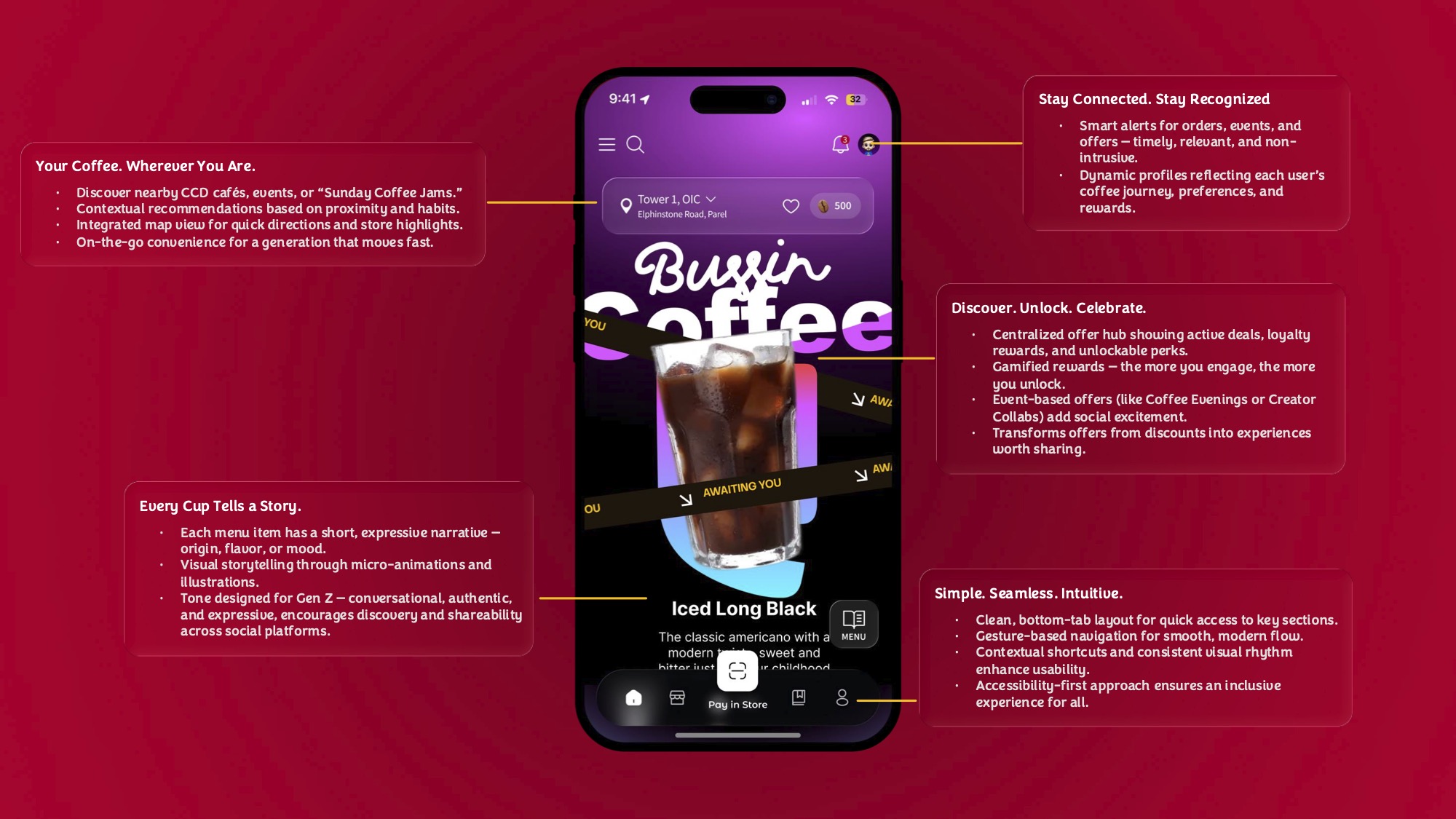
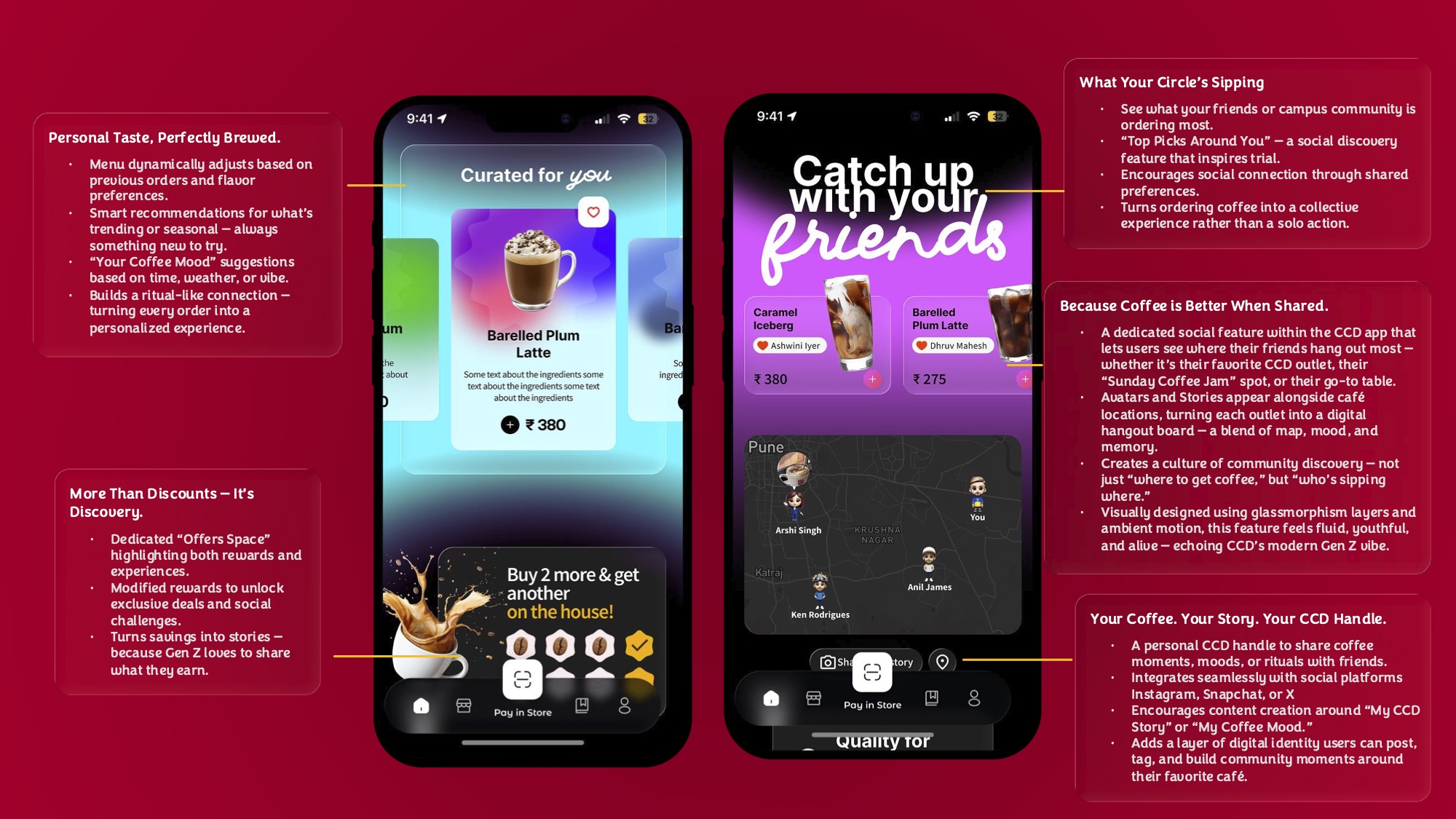
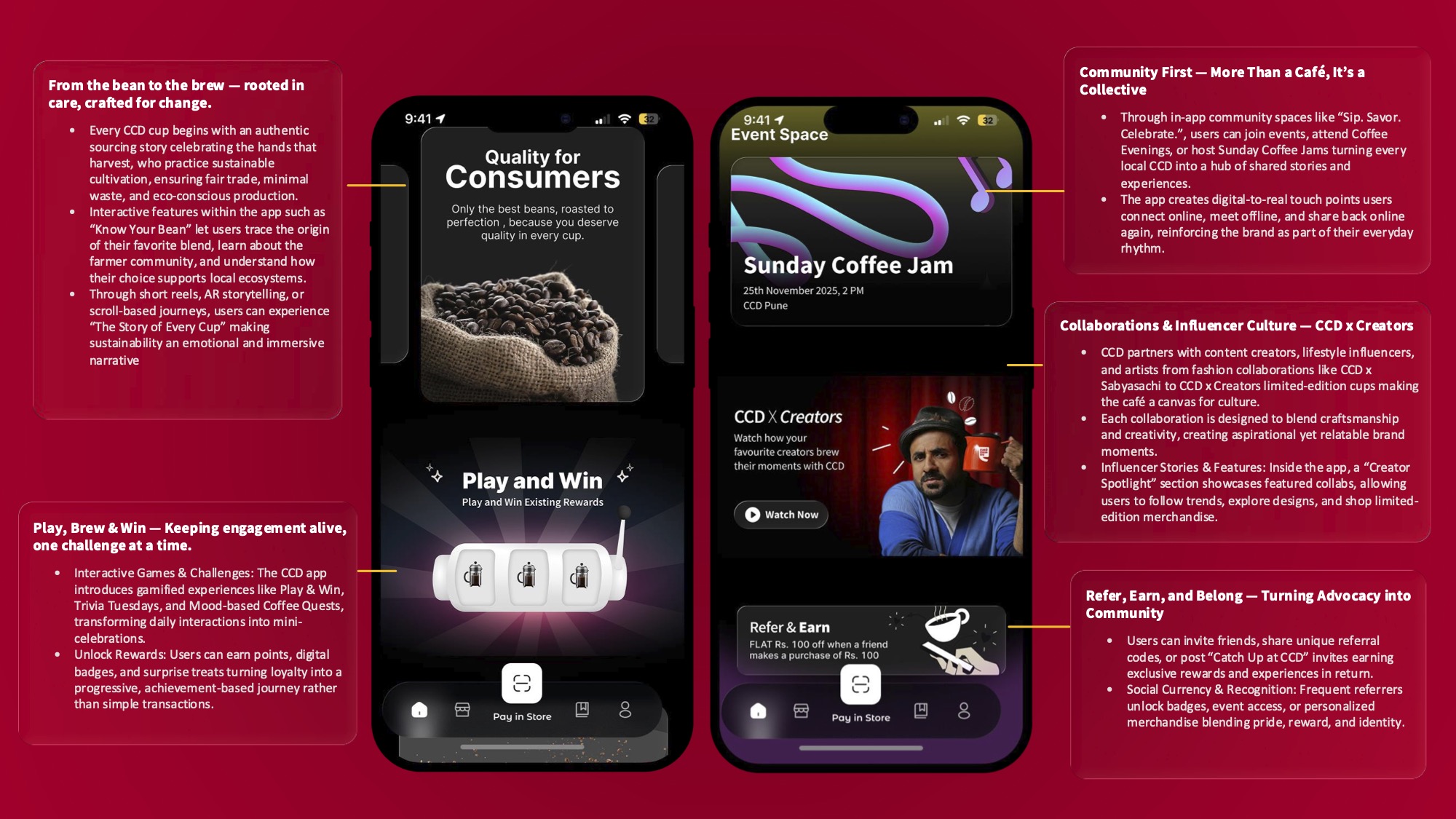
The proposal connected customer strategy and research with brand and creative design, application development, security and testing. This made the experience a shared responsibility across disciplines.
The proposed governance model separated strategic alignment, operational coordination and daily delivery. Fortnightly leadership reviews, weekly working sessions and daily team huddles provided different spaces for milestones, decisions, risks and dependencies. The final cadence was to be agreed at the start of the engagement.
The leadership contribution at this stage was to connect research, a brand point of view and concrete design possibilities into a coherent conversation about the future experience. The concepts helped stakeholders see how convenience, identity and community might work together.
The next step would be to test the riskiest assumptions, prioritise a focused first release and define measures for both ordering usability and repeat engagement. This case documents the proposed direction and delivery approach, rather than claiming a launched product or measured commercial uplift.


