
Make room for personal meaning.
People drew inspiration from memories, places and their own sense of style. Stories and settings could help them see how a piece might belong in their life.
Connecting a new lifestyle brand’s ambition to the way people discover, imagine and choose furniture for their homes.

Godrej was developing Script as a mass-premium lifestyle brand: design-led furniture and décor that responded to how people live. The ambition connected craftsmanship, personal expression and new possibilities for the home.
The business brief called for a responsive commerce website that would showcase the collection, encourage online purchases and drive visits to the physical store. Digital therefore had a role throughout discovery and decision-making, including journeys that continued offline.
The design challenge was to help customers appreciate what made the brand distinctive while giving them the confidence to choose furniture for a real space.
The research combined secondary sources, face-to-face interviews with 11 targeted users in NCR, Bangalore and Mumbai, and contextual field visits in South Mumbai. It explored identity, living spaces, buying confidence, sources of inspiration and expectations of furniture shopping.
The qualitative findings highlighted relationships between the things people own and the lives they want to create. Travel, nostalgia, family needs and recommendations all influenced choices. Concerns about material, comfort, upkeep and delivery could interrupt the journey from inspiration to purchase.
People drew inspiration from memories, places and their own sense of style. Stories and settings could help them see how a piece might belong in their life.
Online discovery could not provide touch and feel. Product information and visual exploration needed to help customers assess fit, materials and everyday use.
People moved between websites, social inspiration, recommendations and shops. The experience had to account for those connected behaviours.
Research synthesis from Case Study 3, pp. 120–167. These are qualitative themes from the documented sample, rather than market-wide findings.
The workshop was structured to bring business ambition, customer evidence and design exploration into the same conversation. Its agenda progressed from the business ask and research to user groups, empathy maps, pain points, outcome statements, scenarios and concept prioritisation.
Four customer groups represented different motivations: design connoisseurship, social discovery, family life and recognition. These provided lenses for considering whose needs a concept served and why it might matter.
The stated problem brought two goals together: making purchase decisions easier and more confident, and helping customers appreciate Script’s design philosophy. The task flow then connected discovery, product evaluation, personal collections, showroom exploration and purchase.
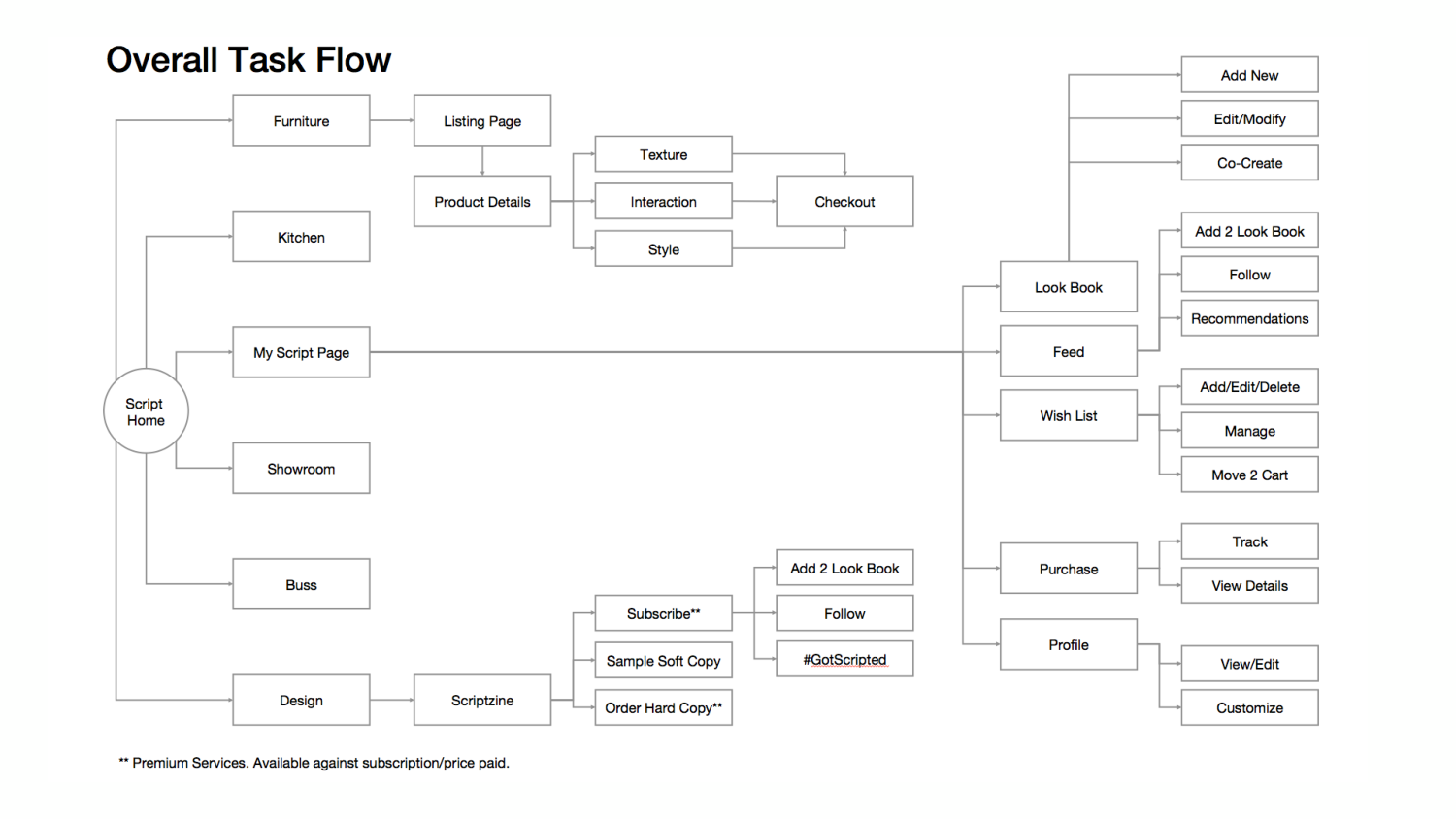
A shared experience direction gives business, design and technology a basis for discussing priorities and dependencies.
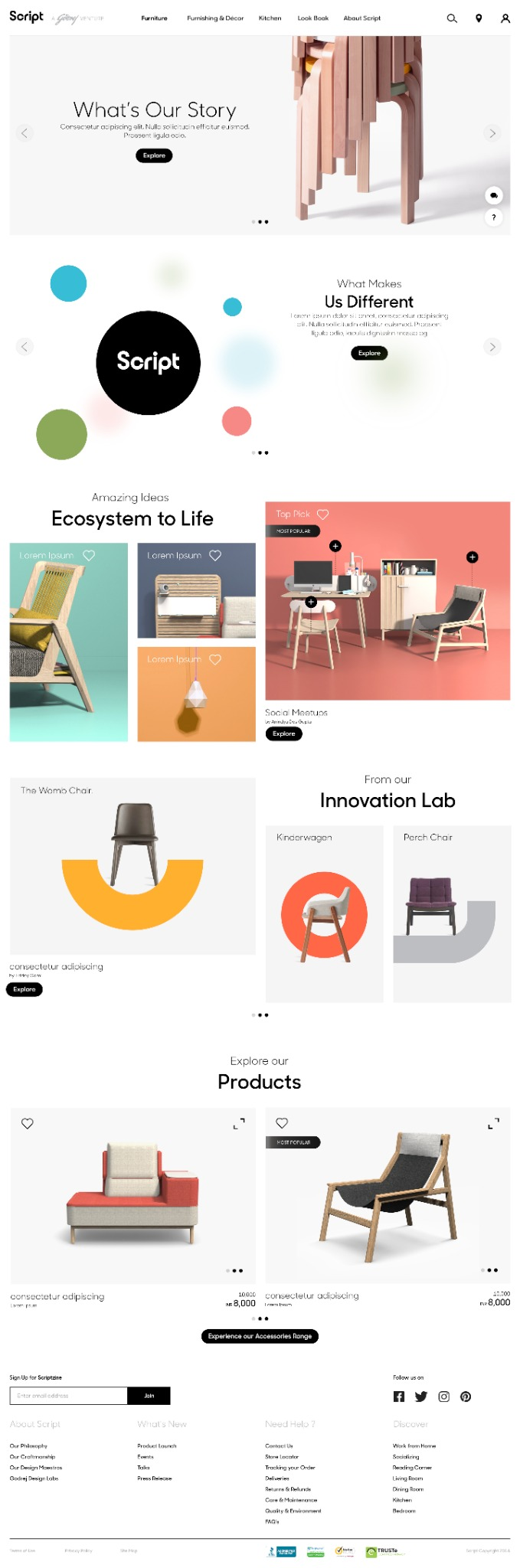
The homepage design introduces the brand’s story and point of view, then moves through lifestyle collections, an innovation section and products. This sequence gives customers context for the collection as they explore it.
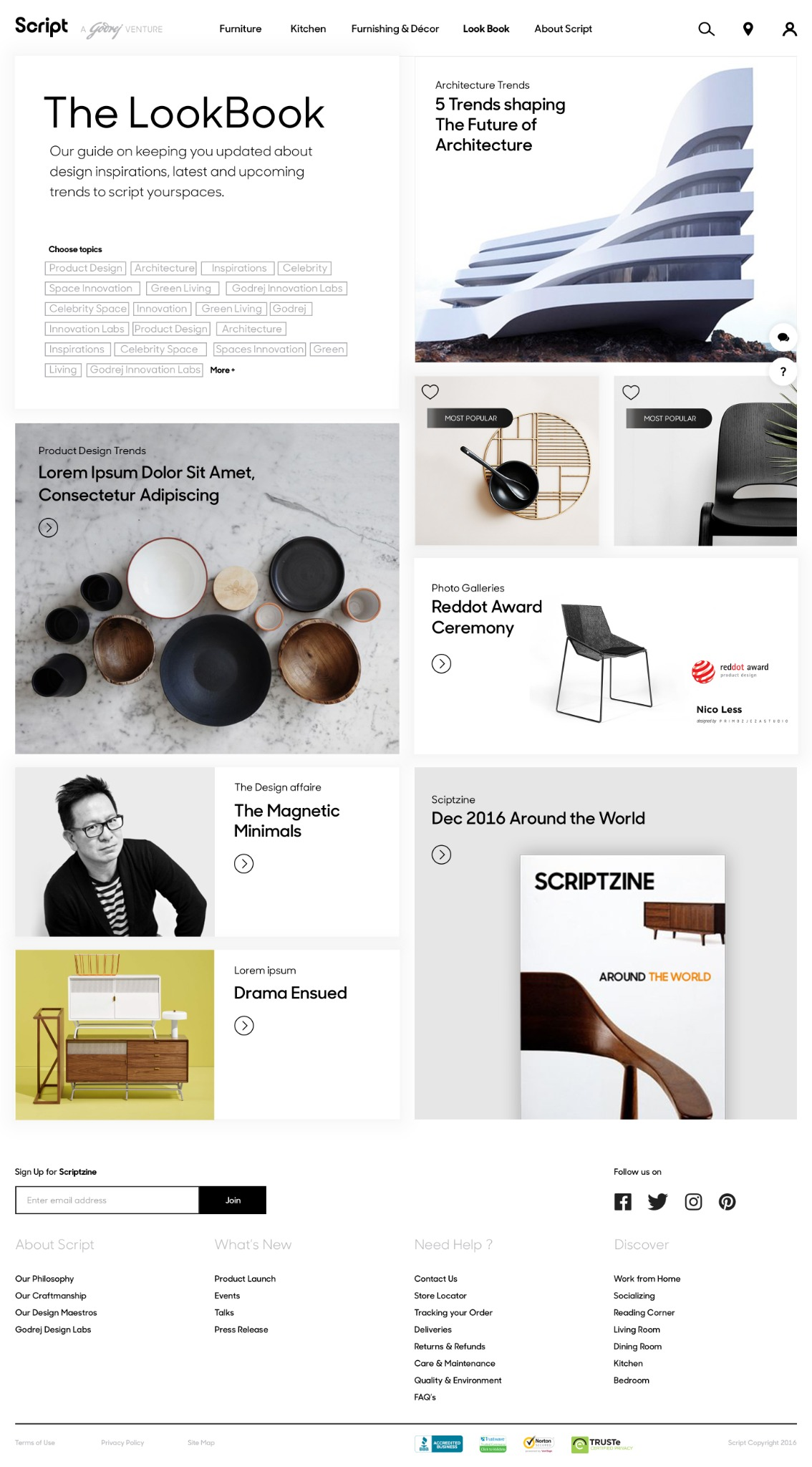
The LookBook design extends discovery through editorial content: architecture, objects, designers and trends. The mobile listing brings familiar shopping controls into that wider world, including sorting, filters, favourites and related products.
The mobile product-listing design includes category navigation, sort and filter controls, product cards and related-product sections. A separate kitchen page explores a longer, content-rich mobile experience.
These supplied screens include placeholder content and prices. Their purpose here is to show the design direction.
View mobile listingThe kitchen image was supplied at 76 pixels wide; fine text is not legible at this resolution.

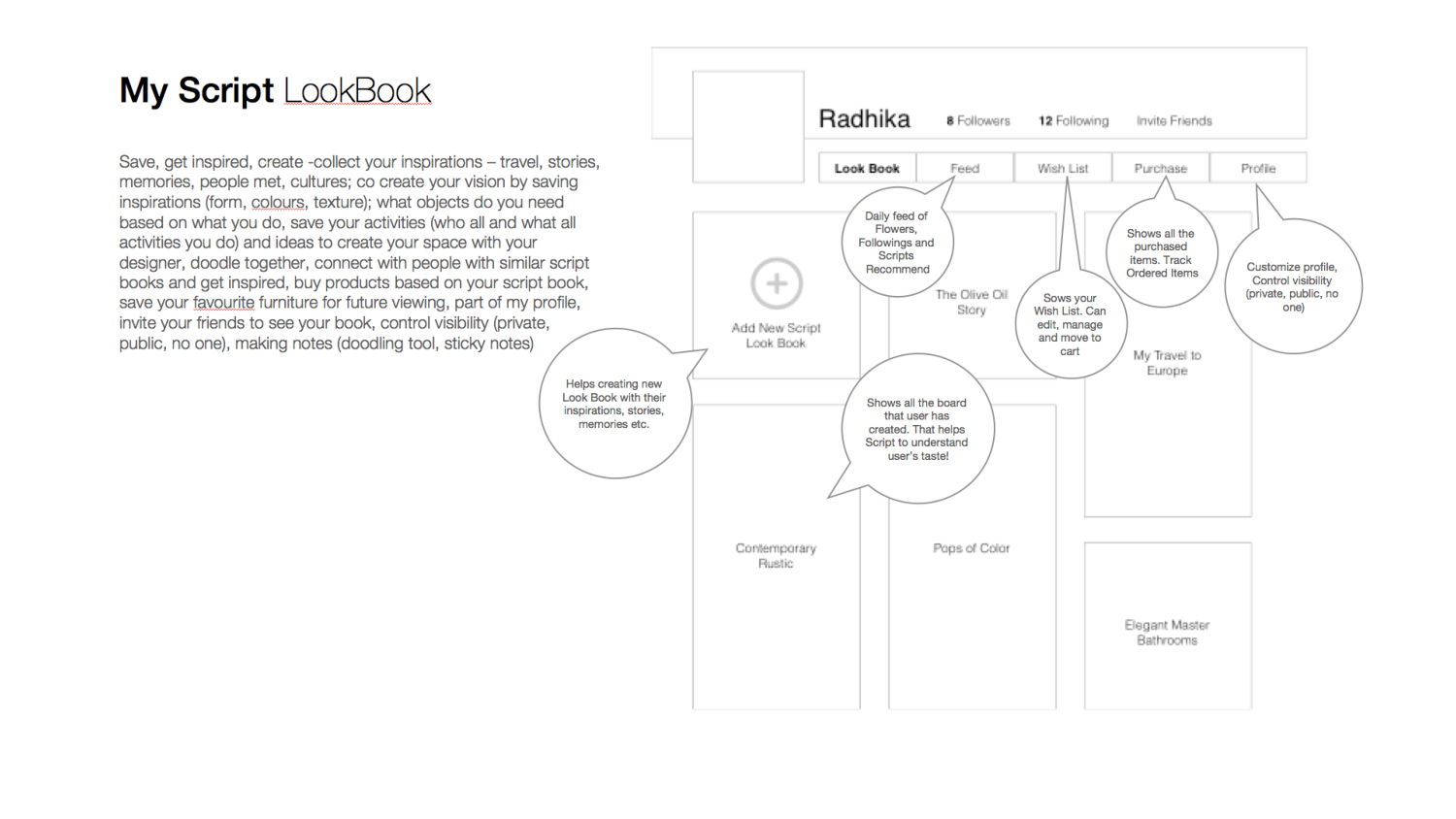
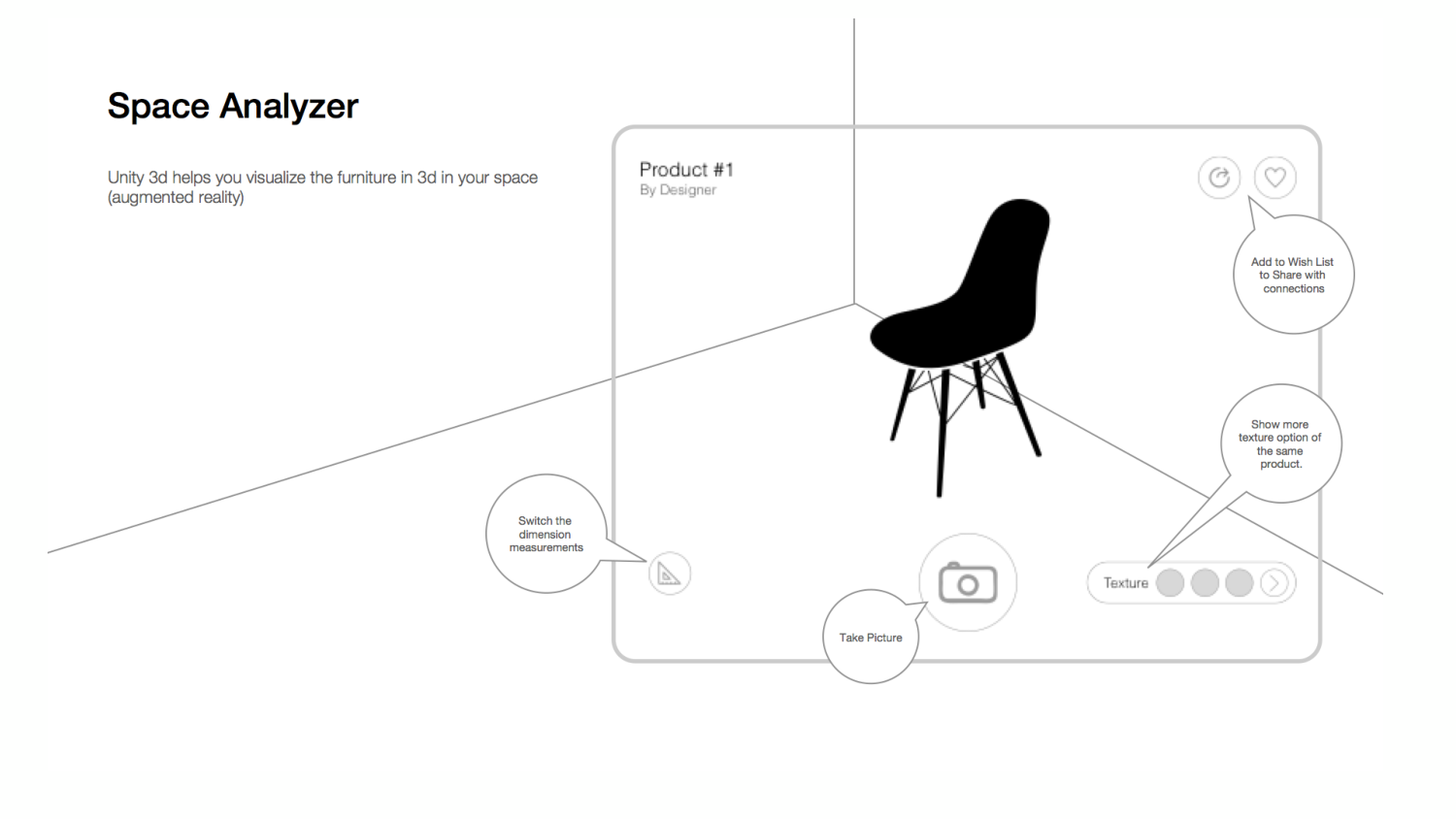
The concept work explored further ways to support discovery and evaluation. A personal LookBook proposed saving inspirations, collecting favourite products and sharing ideas. A Space Analyzer concept proposed viewing furniture in a customer’s room, with options for textures and dimensions.
These explorations made possible extensions of the experience tangible. They also surfaced different delivery needs: social and privacy controls for personal collections, and product assets and technical feasibility for room visualisation.
From a leadership perspective, the next step would be to test the customer value, effort and business case of each idea before agreeing additional scope. The materials do not establish that these concepts were built or became further commercial engagements.
The project artefacts connect a business brief to customer research, a workshop structure, user groups, task flows, exploratory concepts and desktop and mobile designs. Together, they show how a brand ambition can become a concrete experience direction.
Conversion, store visits, customer engagement and commercial expansion would help establish its impact. Verified results, release scope and my individual contribution are still needed to complete that part of the story.

