
Show the cost early.
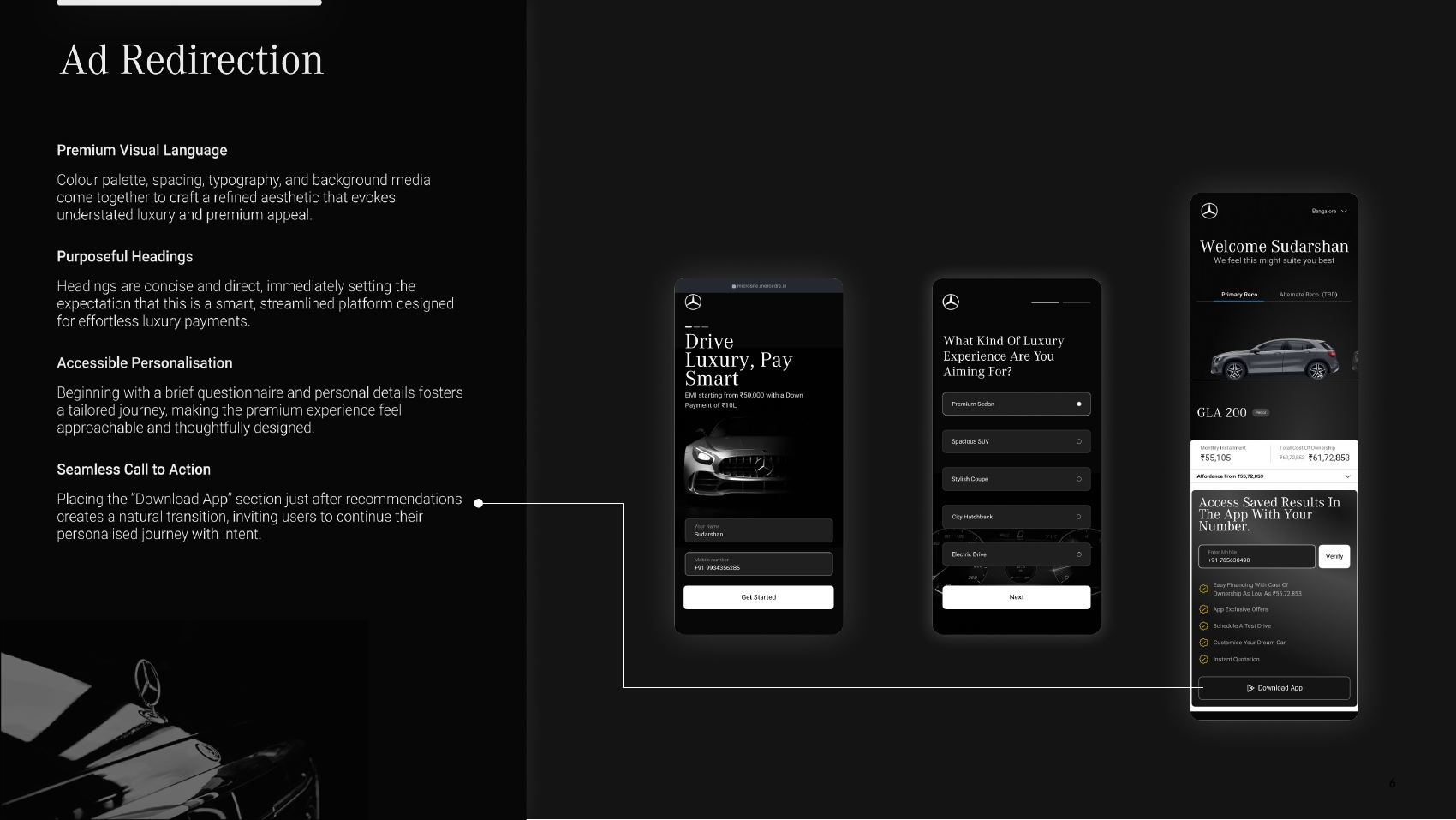
Bring EMI options and ownership costs into exploration, with explanations that help people understand the offer.
Connecting aspiration with affordability, so a premium car buyer can move from interest to a confident next step.

The proposal explored a gap between financial readiness and perceived access. Some premium car buyers could consider Mercedes-Benz, yet assumed ownership was beyond their reach. Aggregators made comparison easy but flattened the brand into filters and specifications. Brand experiences inspired desire while leaving affordability and the next step less clear.
The design challenge was to help people understand what ownership could mean for them. That required a connected experience across discovery, financing and dealership contact.
The proposal brought design, content, technology and go-to-market thinking around a shared idea: “Luxury is closer than you think.” The leadership contribution is in connecting the business ambition to the buyer’s hesitation, then making that connection tangible enough for a client and delivery team to discuss.
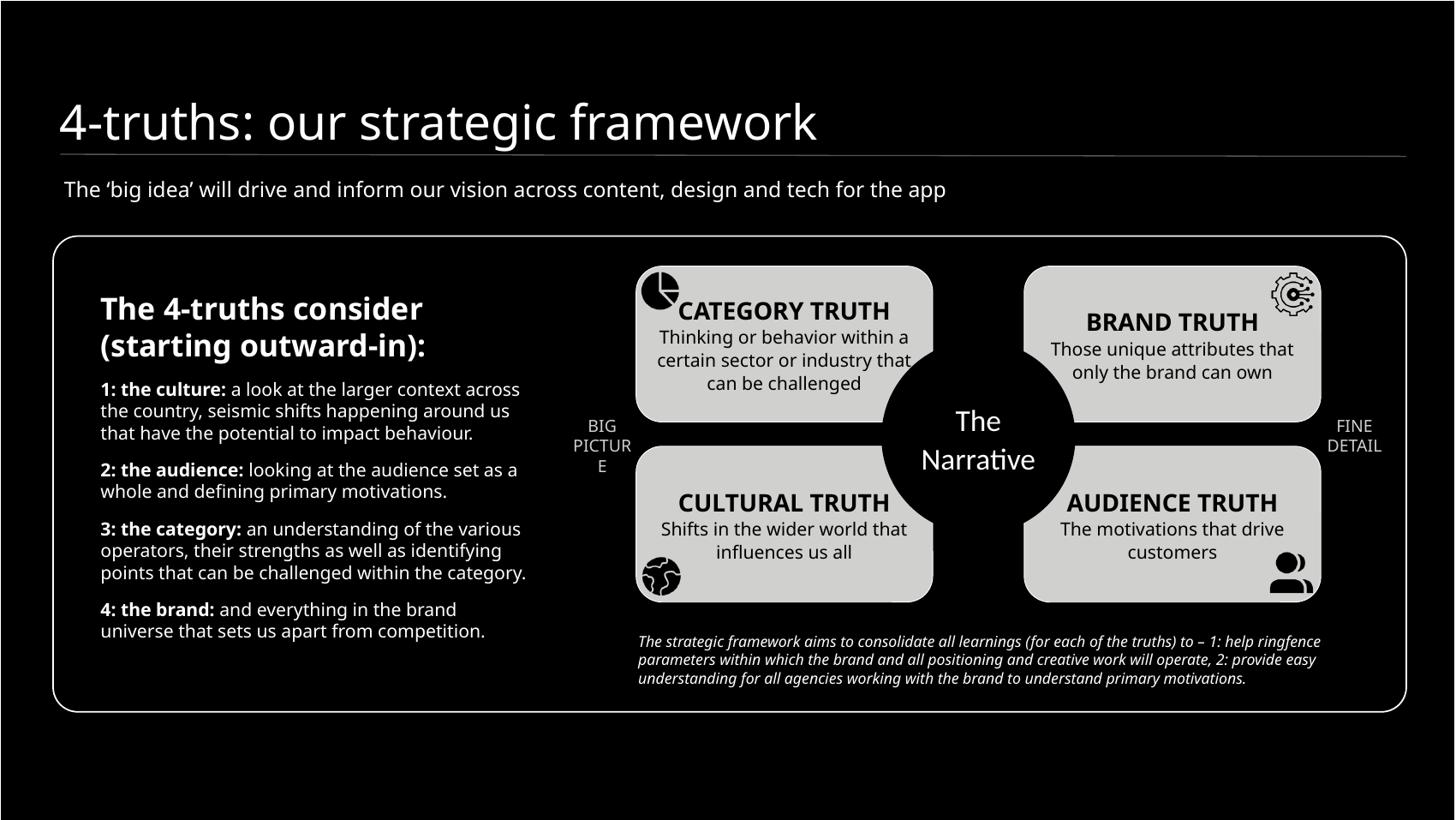
The storyboard used four lenses: culture, audience, category and brand. Together, they provided a basis for choosing what to communicate, which moments to simplify and how the app could support a credible path to ownership. The work shown here represents the team’s proposal and concept exploration.
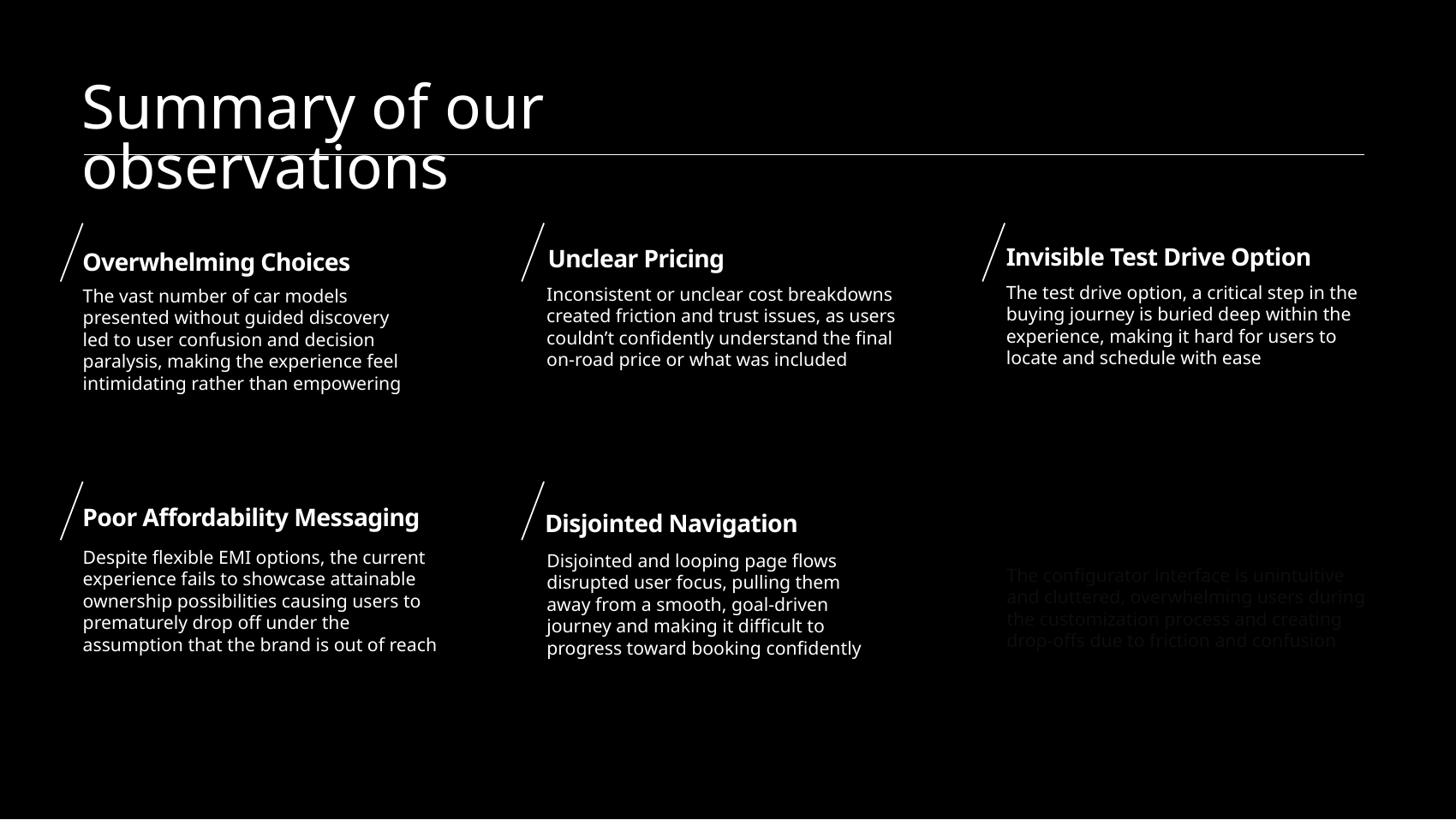
The team’s assessment identified overwhelming choices, unclear pricing, weak affordability messaging, looping navigation, a complex configurator and a hard-to-find test-drive option. These observations informed the concept direction; the deck does not document a completed usability study.
Bring EMI options and ownership costs into exploration, with explanations that help people understand the offer.
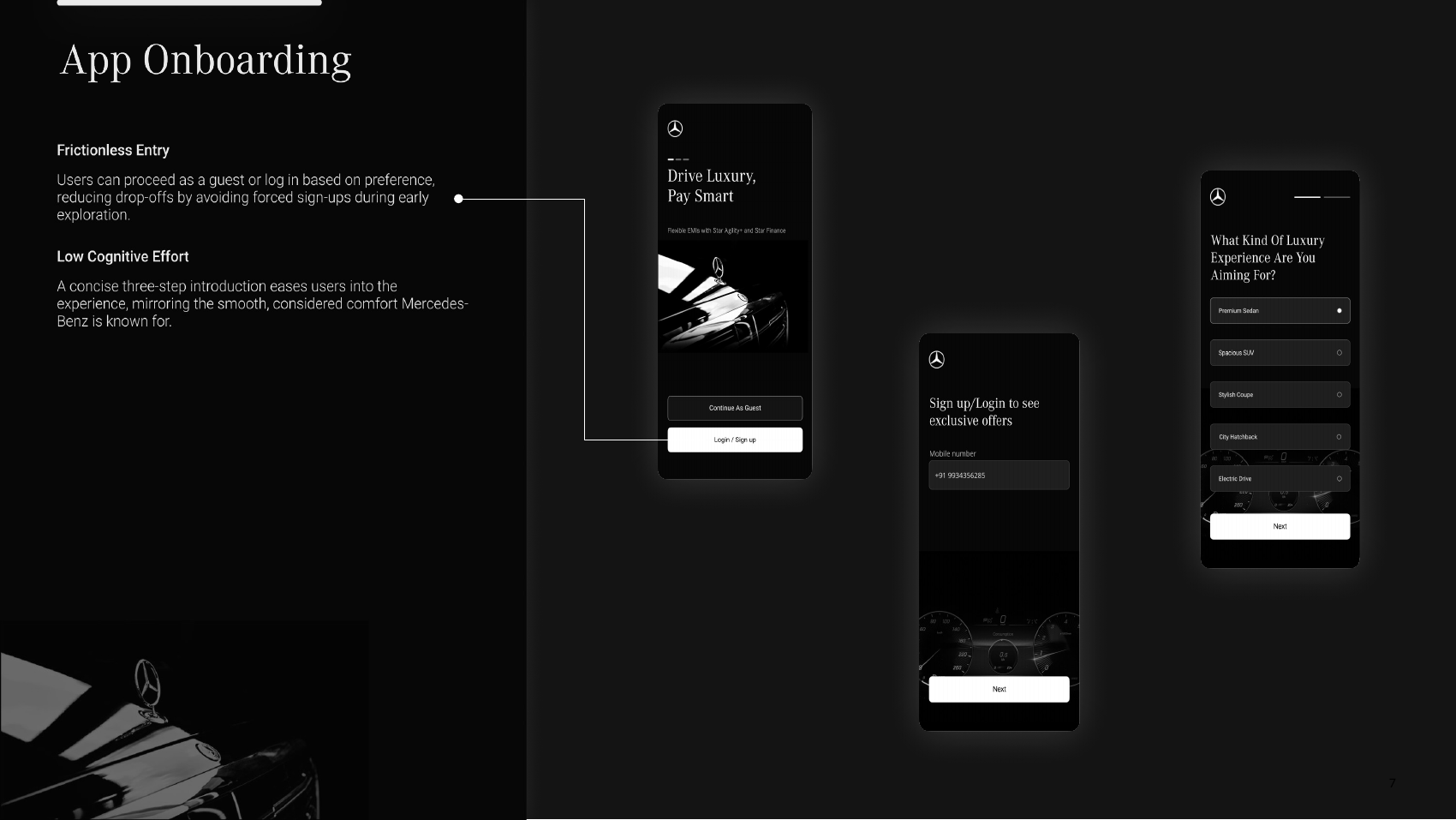
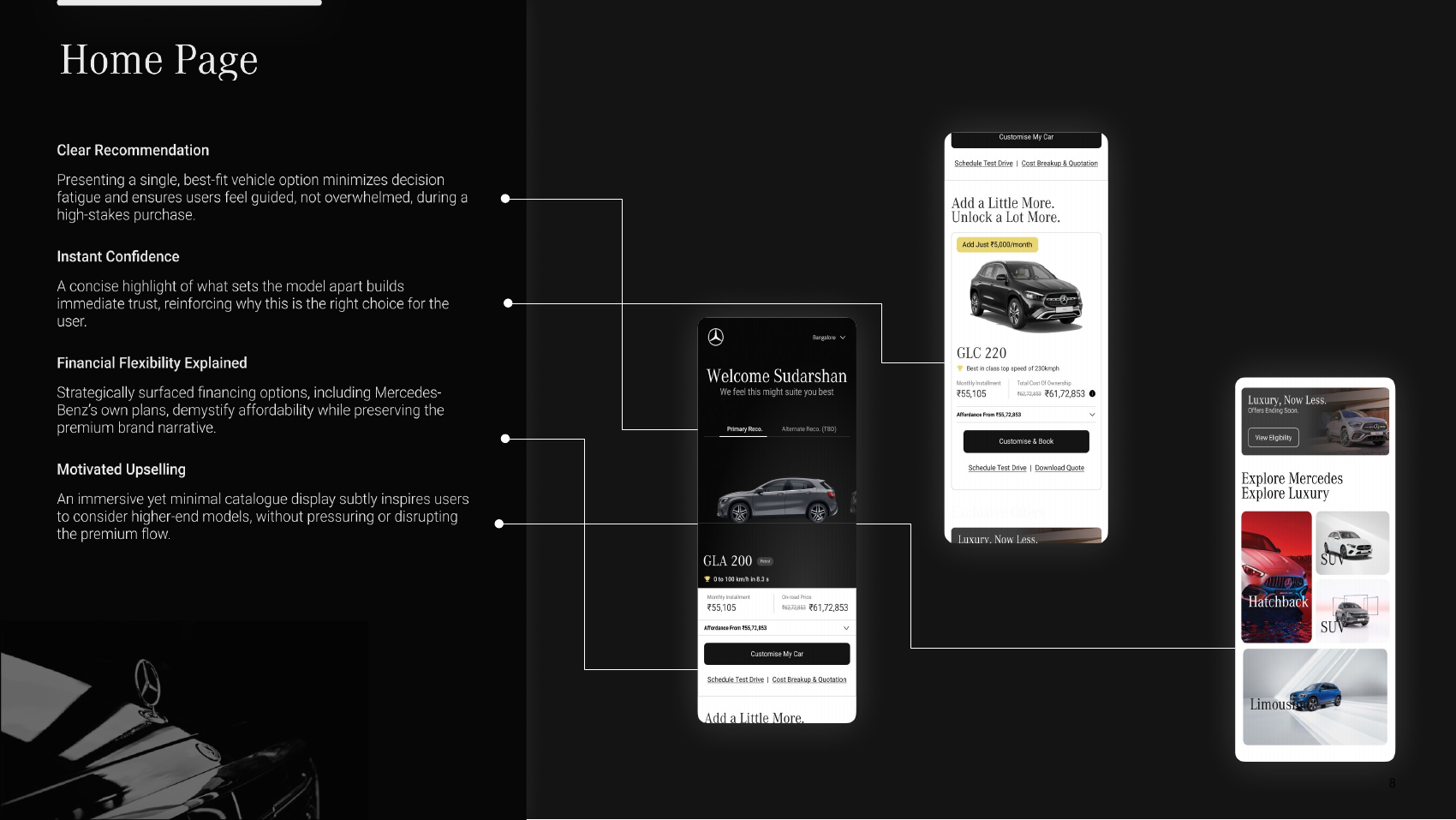
Use intent and preferences to make recommendations, then keep configuration and price changes understandable.
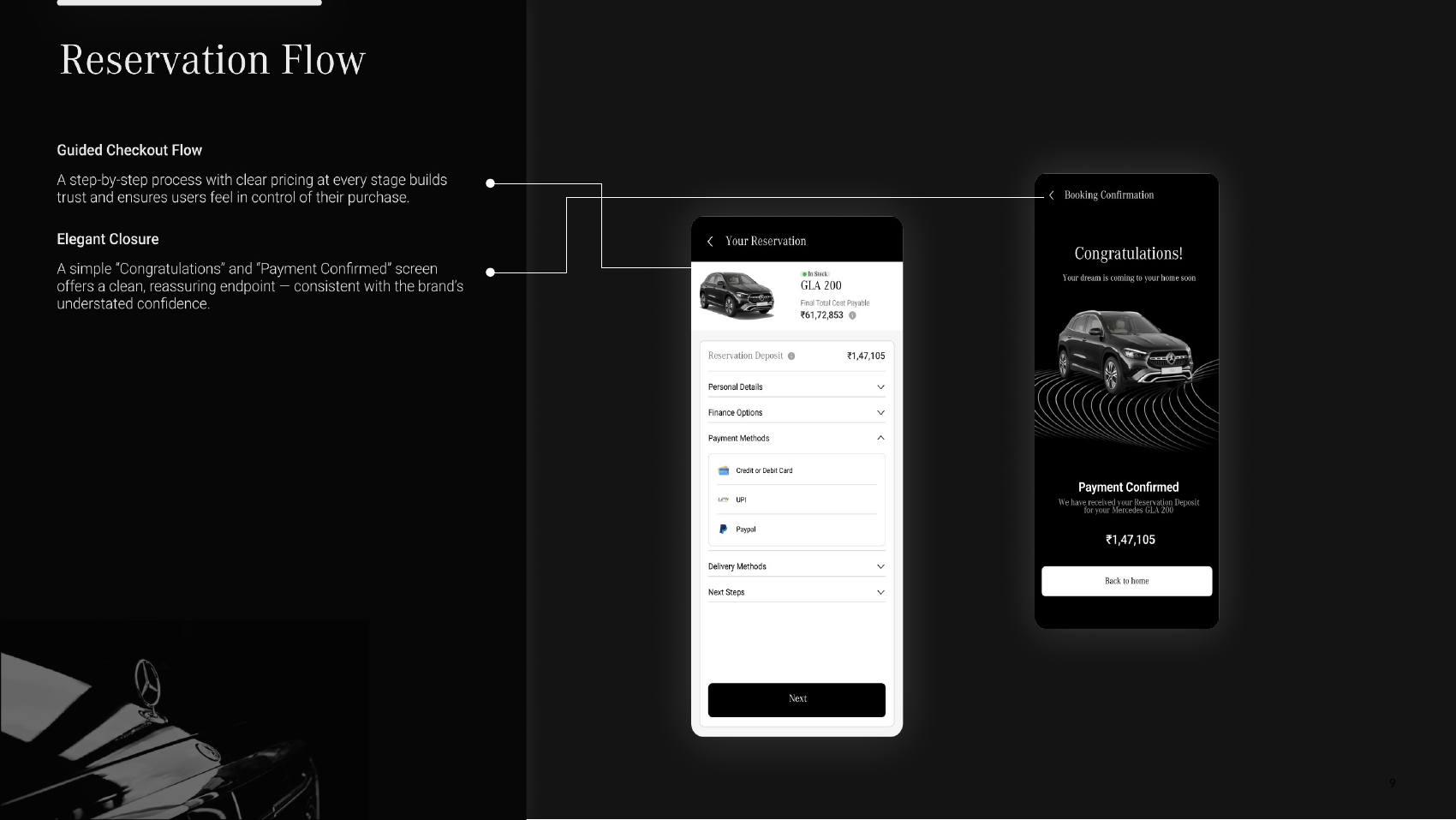
Connect model exploration to test drives, financing and booking, with a clear handover between stages.
The storyboard connects an initial affordability message with a short preference questionnaire and tailored recommendation. Within the app, transparent cost scenarios, configuration and access to financing help people explore the choice. The proposed flow continues through booking and confirmation to delivery tracking.
Immersive vehicle exploration was an additional concept. Its value would need to be tested against the more immediate questions buyers have about suitability, cost and commitment.
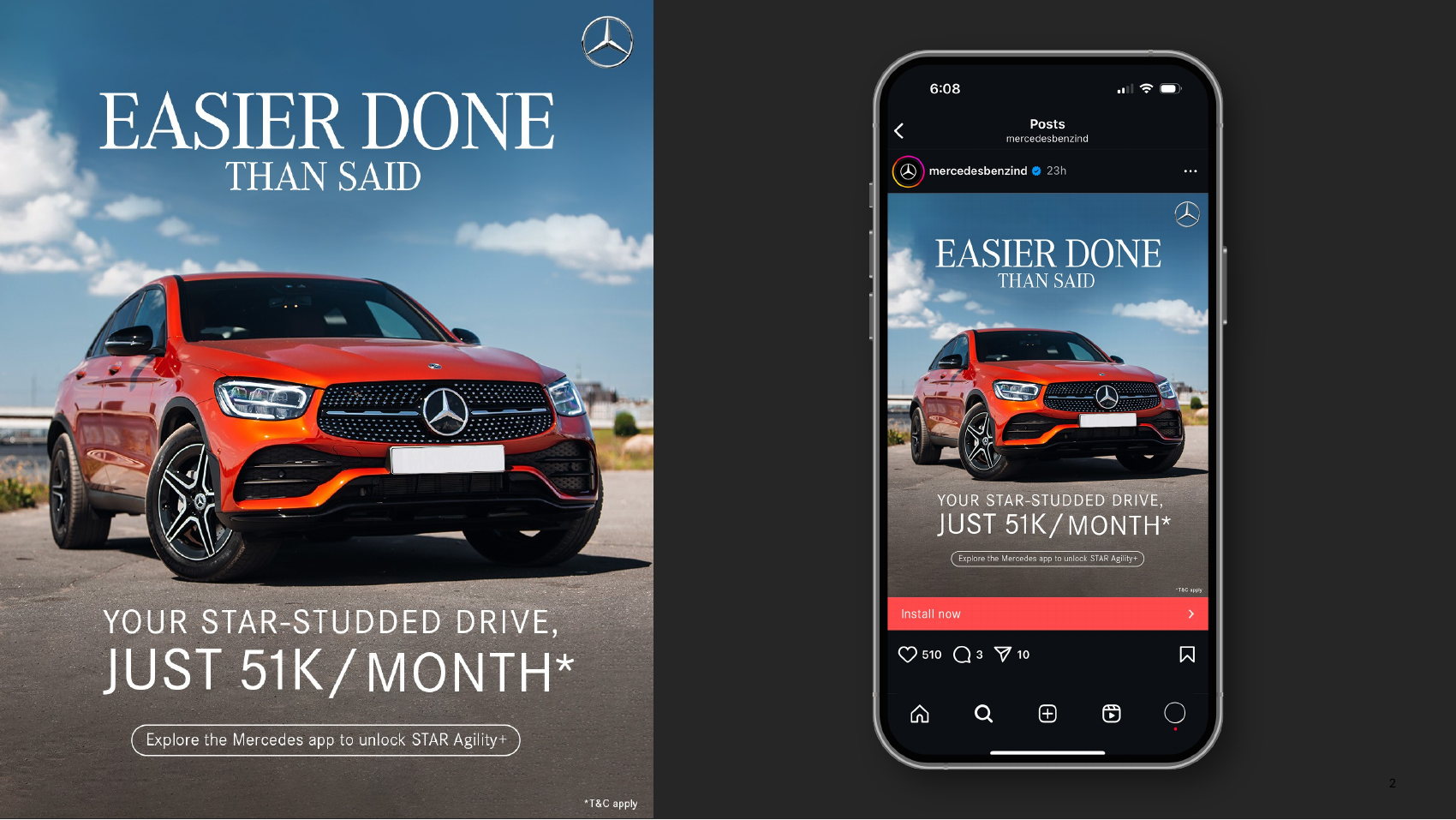
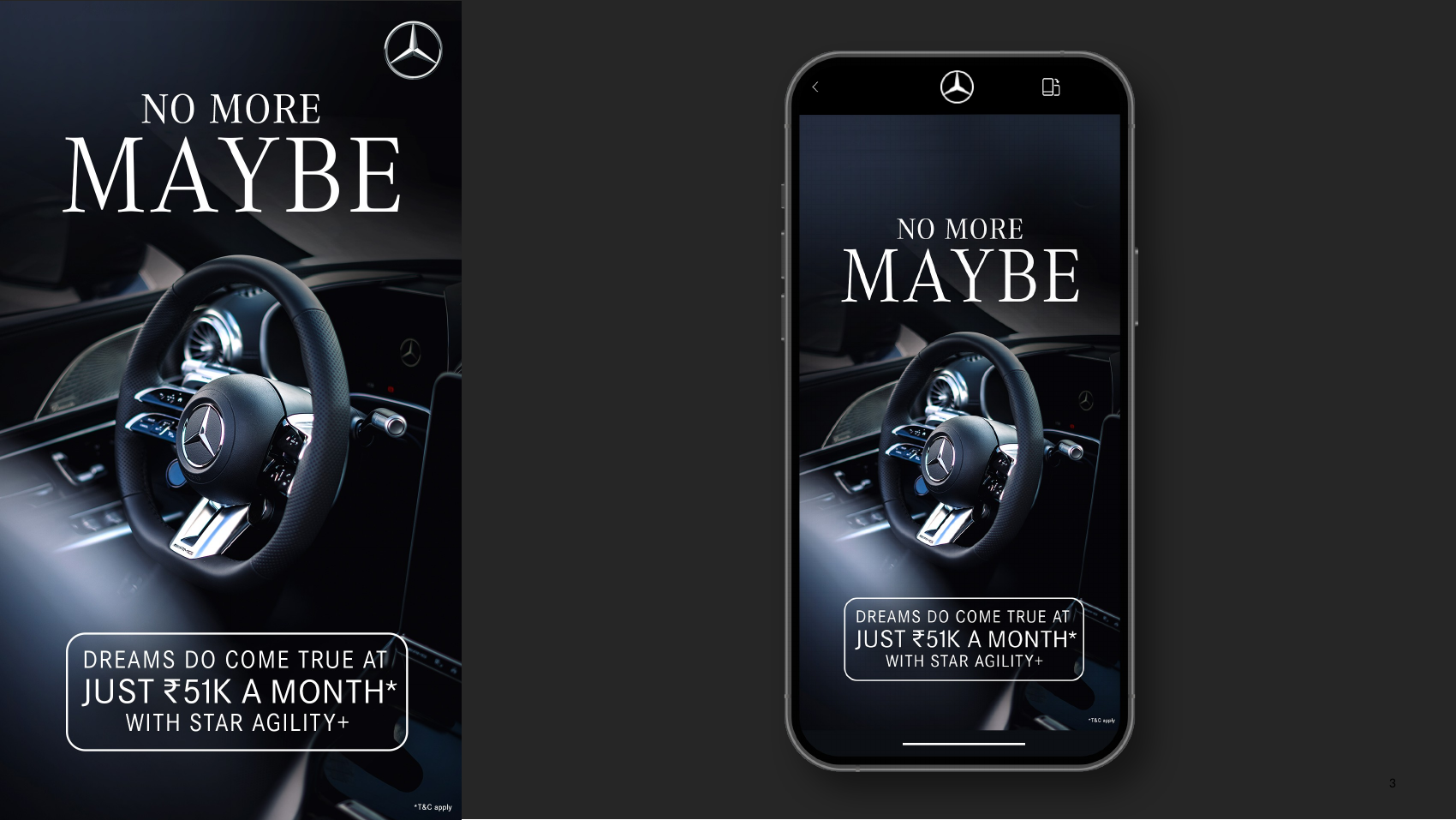
The mobile and web concepts make the direction reviewable across product, brand and technology stakeholders. They show how an ownership proposition can shape the journey beyond individual screens.
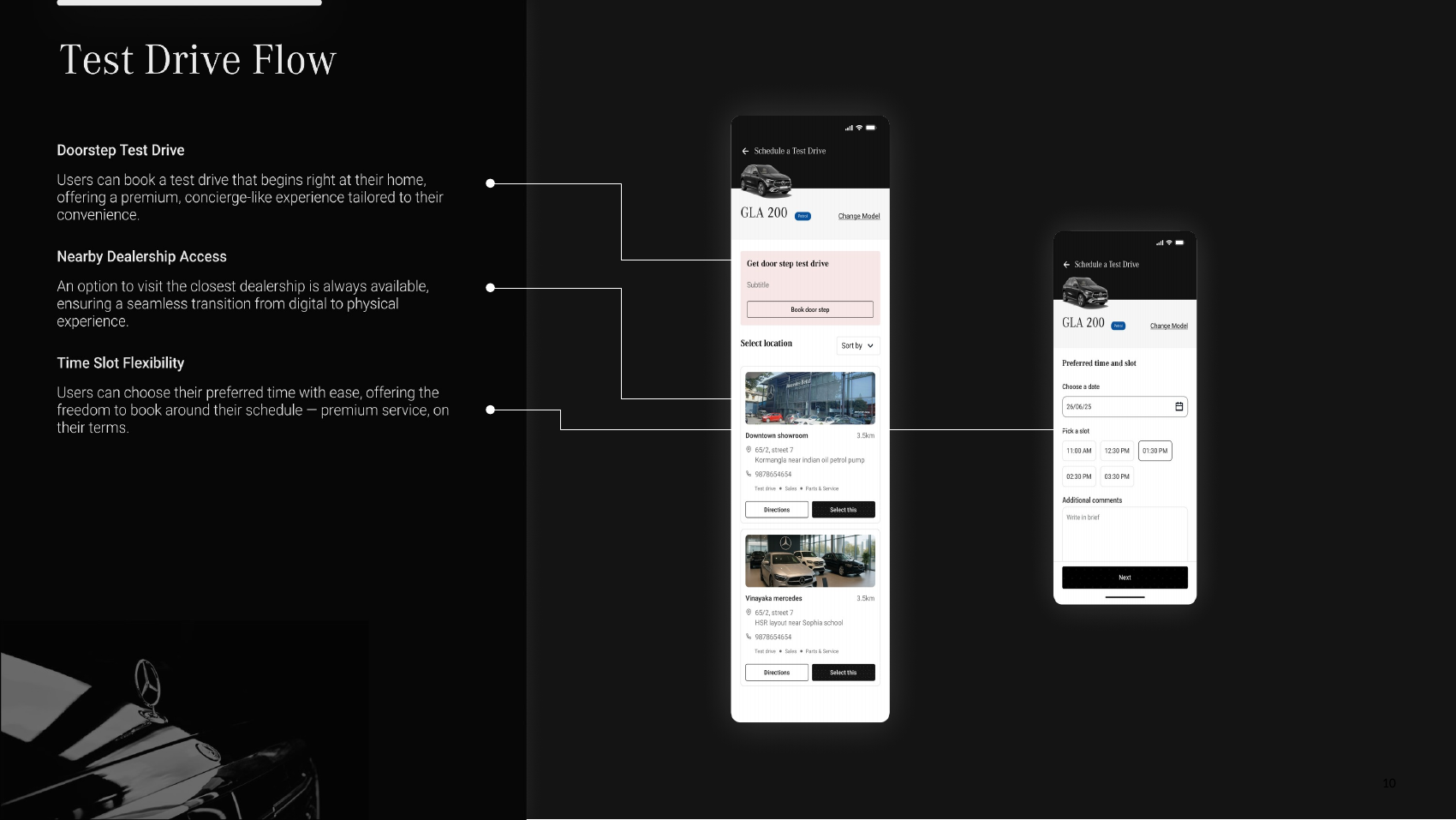
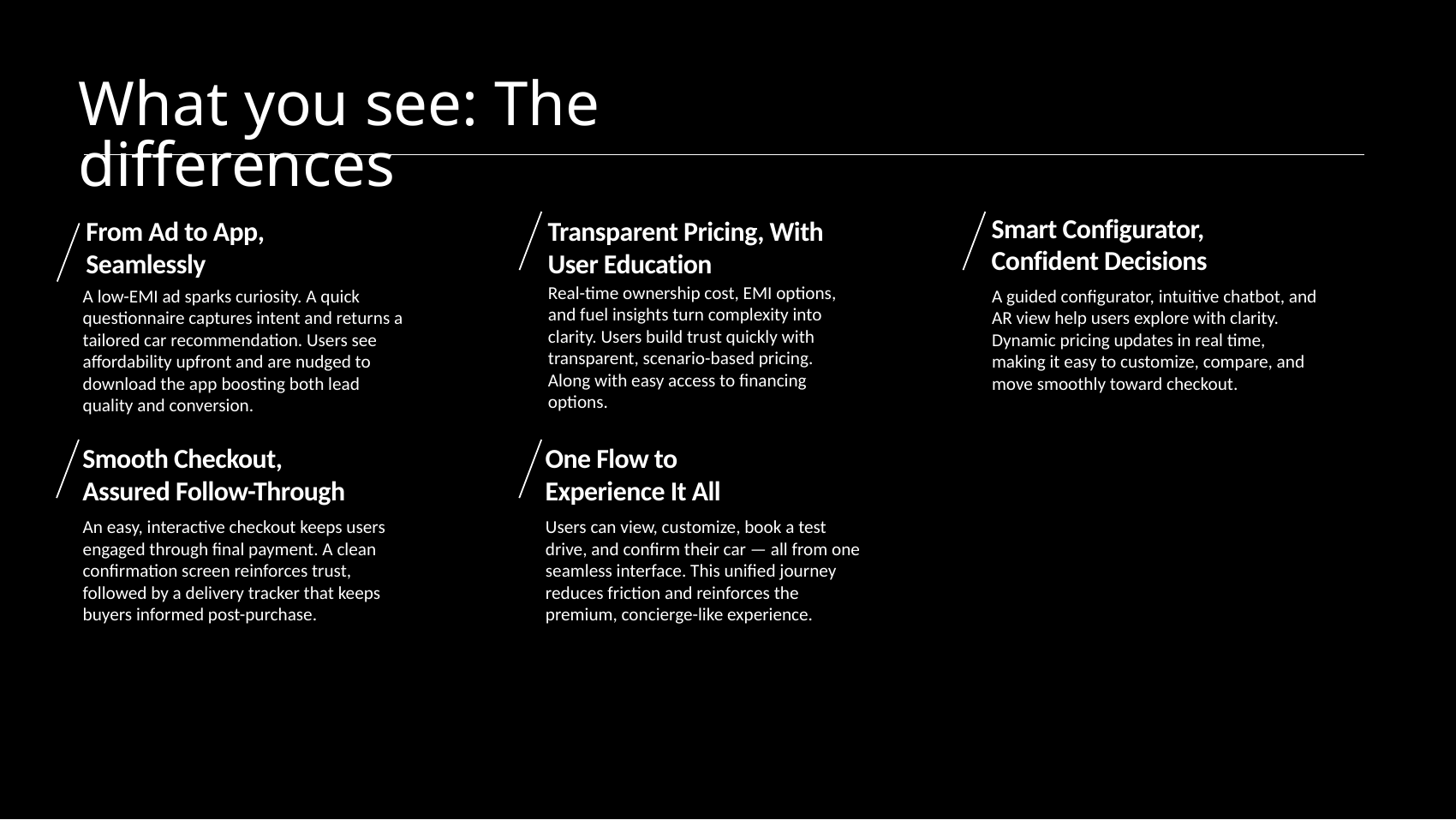
The proposal created a coherent story for the opportunity and a tangible experience direction. It connected buyer psychology with a proposed product journey and the disciplines needed to deliver it.
The next step would be to validate affordability comprehension, recommendation relevance and confidence in the route to a test drive or booking. Measures could include task completion, abandonment by stage and the quality of enquiries passed to a dealer.
Based on the supplied draft proposal storyboard dated 30 June 2025. Concepts, market estimates and intended benefits describe the proposal. This material does not establish a production launch, conversion uplift, revenue outcome or completed user validation.

