From fragmented work
to shared operational clarity.
Using design thinking to connect people, processes and data around a more coherent way of working.
The complexity was organisational.
The interface was only part of it.
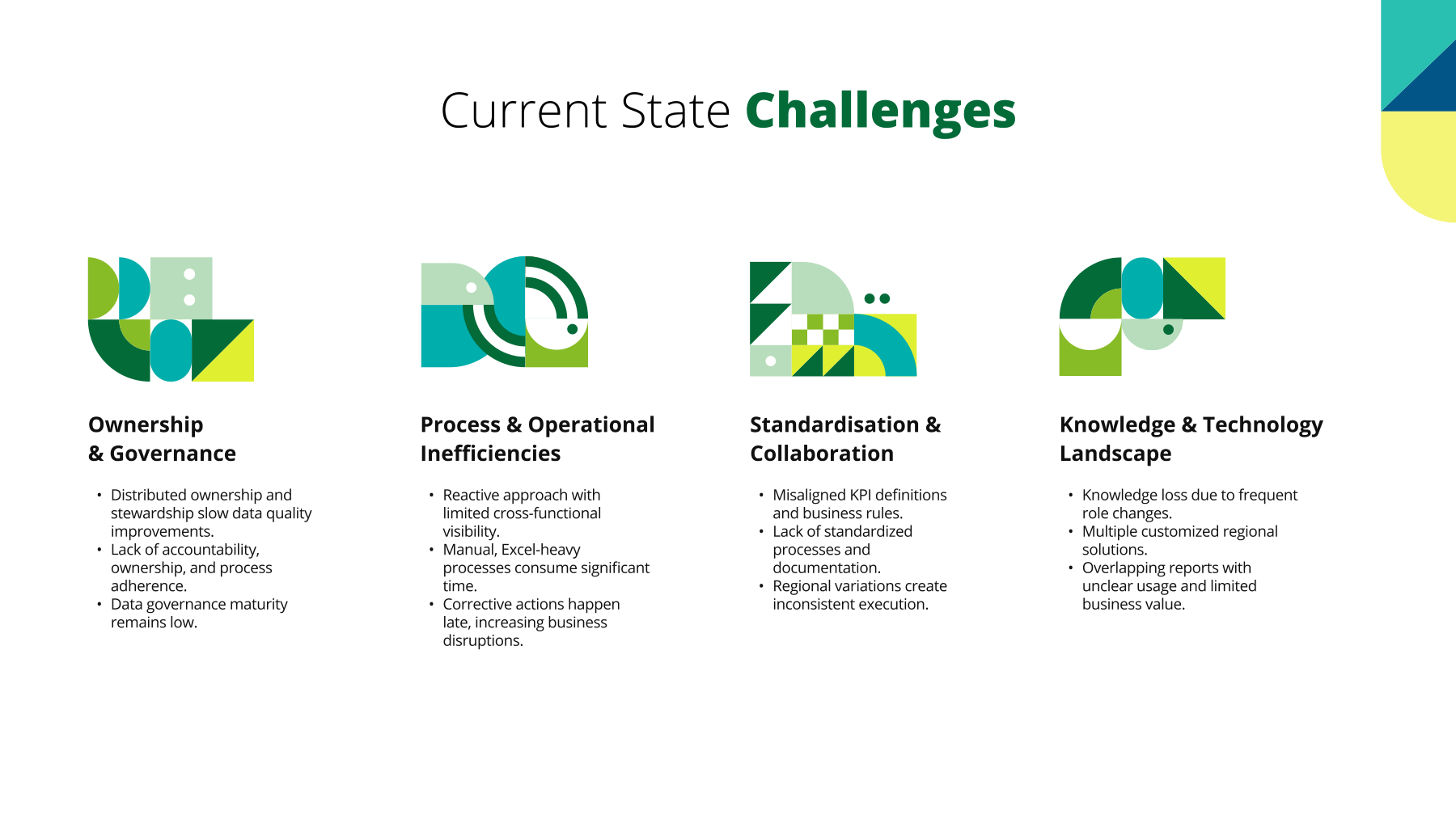
Kenvue’s operations were spread across regions, customised systems and overlapping reports. Ownership was distributed, KPI definitions differed, and manual, spreadsheet-heavy processes limited cross-functional visibility.
Late corrective action compounded disruption. Frequent role changes made knowledge harder to retain. A new dashboard would only be useful if the team also aligned on the problems, the users and the decisions it needed to support.
Create alignment before
scaling the solution.
The Deloitte Digital team introduced design thinking after discussions with Kenvue. The engagement connected business-problem definition, user understanding, prioritisation and a phase-wise product strategy.
The leadership value sits in connecting those activities: making the challenge shared, giving stakeholders a basis for decisions, and creating a design foundation that could carry across journeys. The delivery story is a team contribution; the deck does not isolate individual authorship.
Listen for the problems
behind the requirements.
Employee interviews and focus groups informed requirement gathering and exposed underlying issues across four areas: ownership and governance, operational inefficiency, inconsistent standards, and the technology and knowledge landscape.
That reframed the opportunity around shared visibility, clearer workflows and more proactive decisions, with less reliance on disconnected regional solutions.
Choose the session
around the decision.
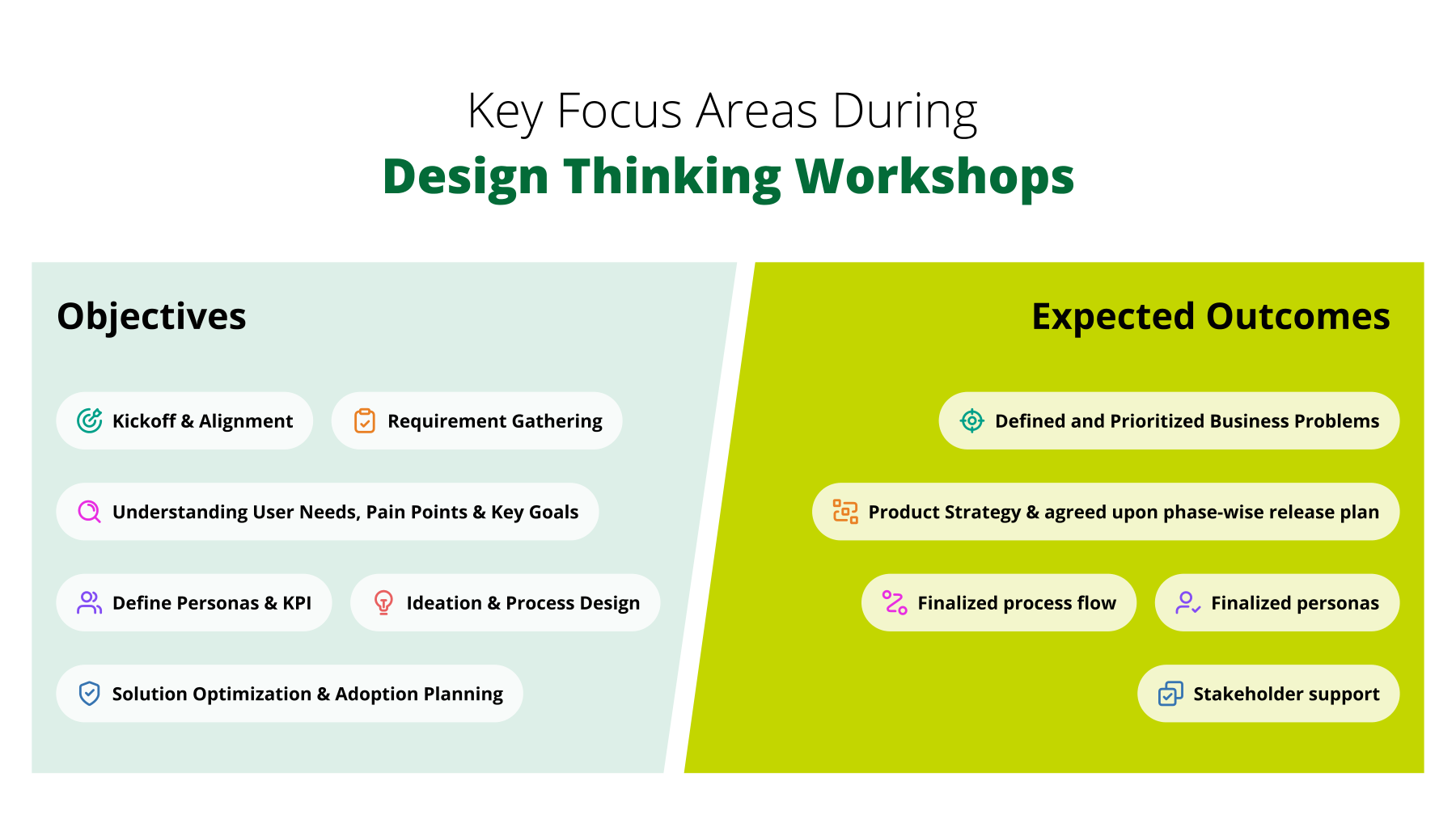
The workshops linked kickoff and alignment with understanding users, defining personas and KPIs, ideation, process design and adoption planning. The aim was to leave with prioritised business problems, agreed product direction, process flows and stakeholder support.
This made the workshops a bridge between discovery and delivery. The key question was what the group needed to resolve next, and which evidence and participants would help it get there.
Bring the signals together.
Give people a way to act.
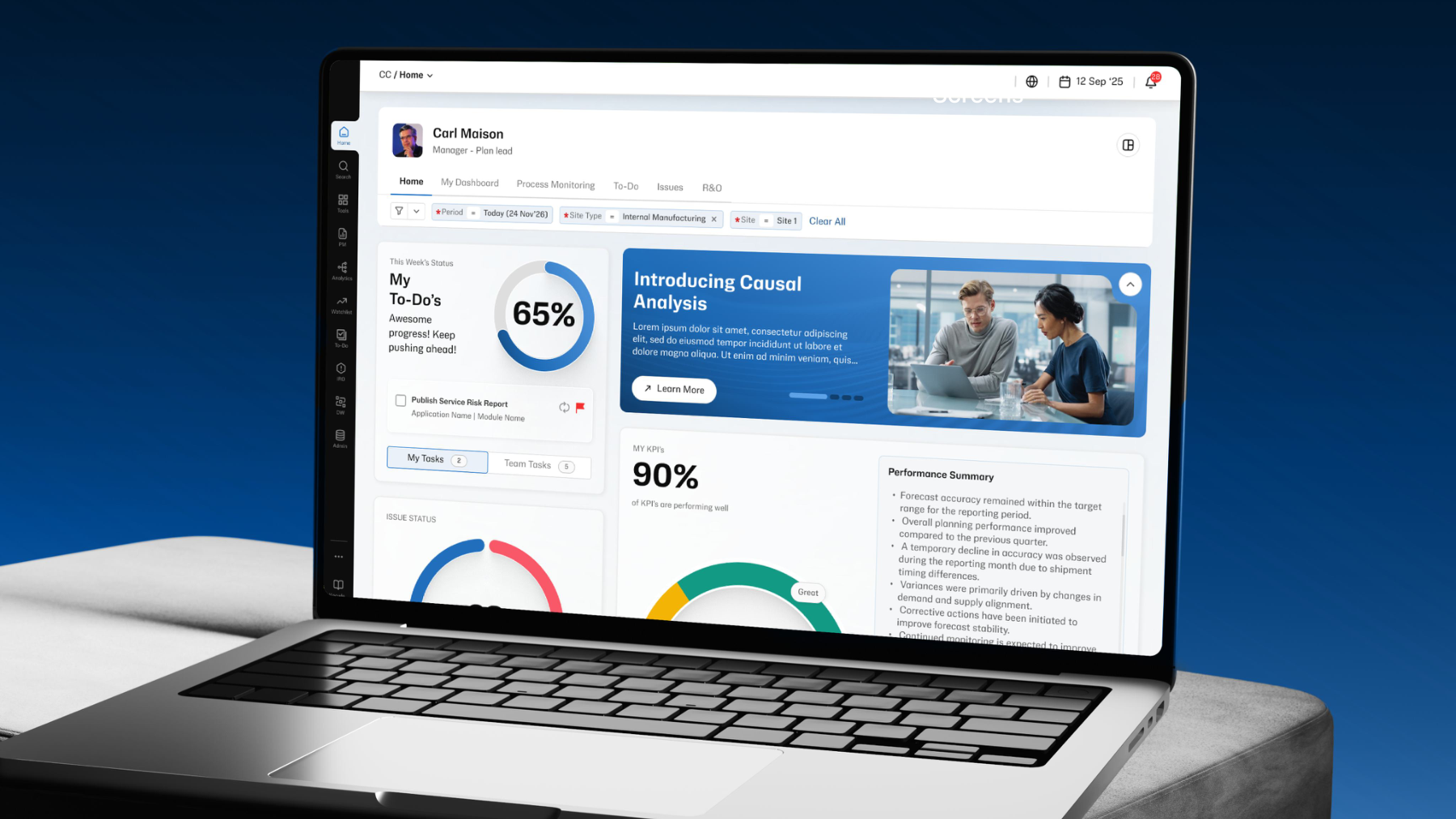
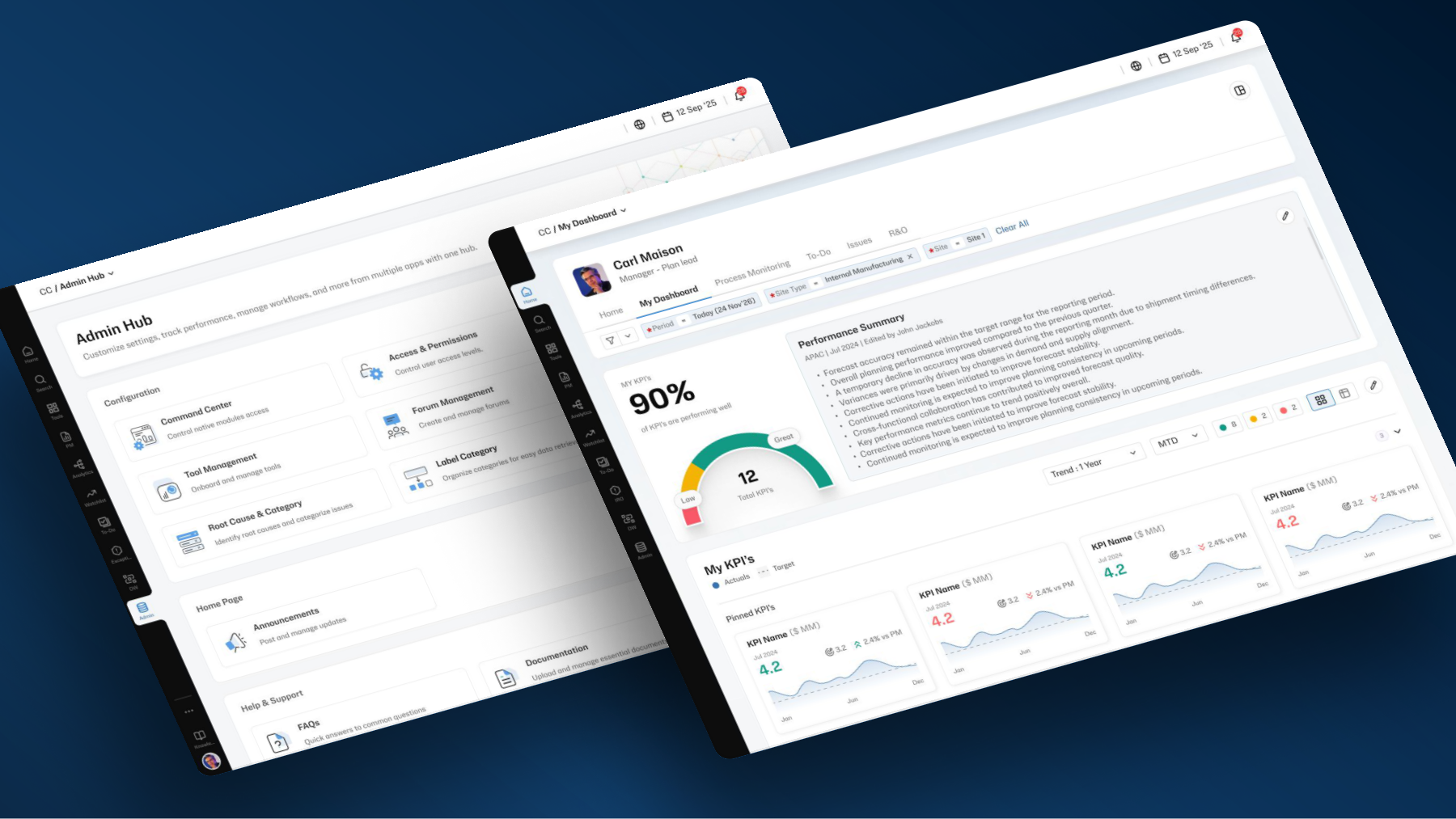
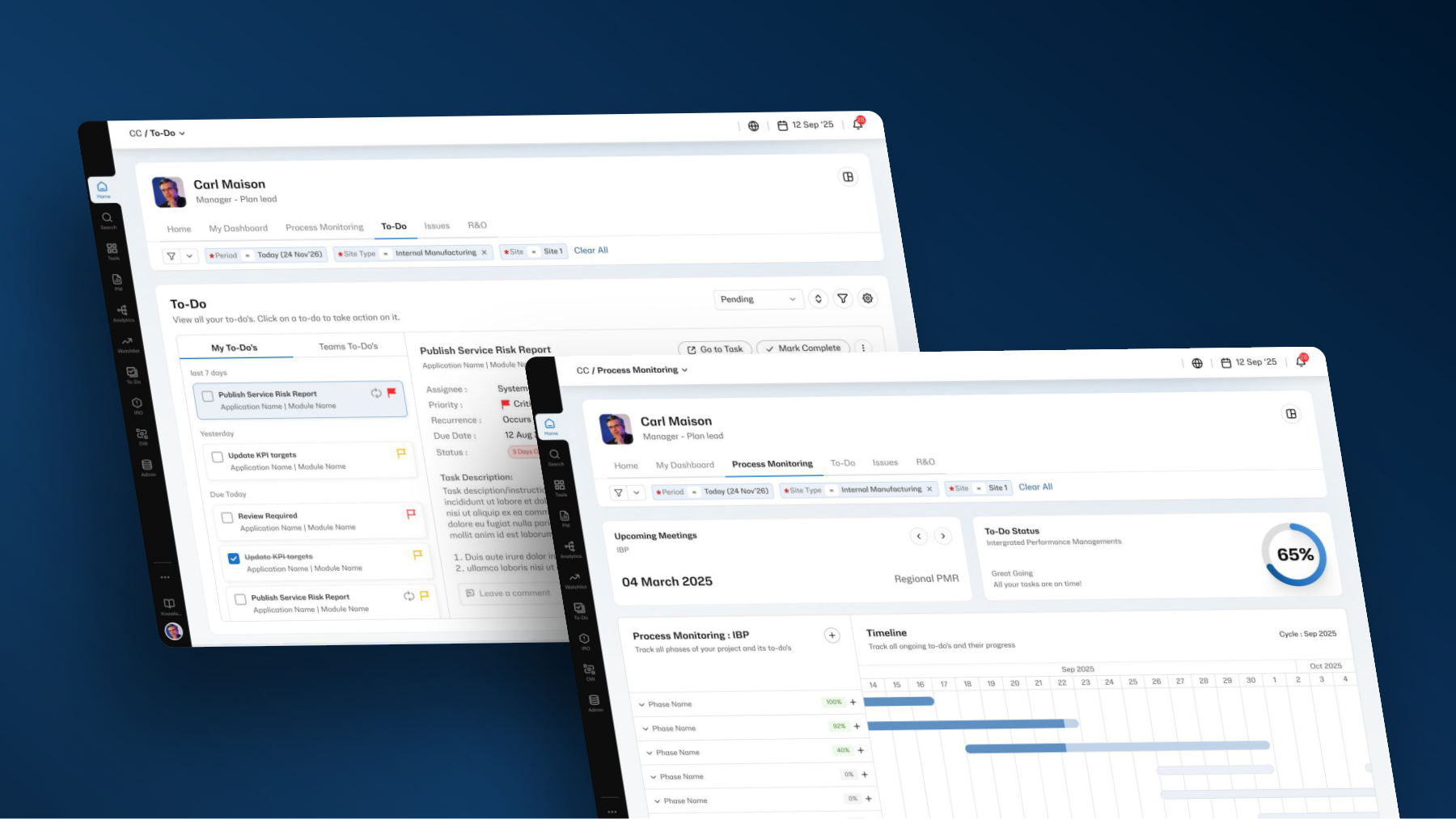
The proposed experience brought personalised dashboards, multiple KPIs, tasks and operational information into a shared view. Shorter journeys and simplified tables were intended to reduce the effort of finding information and responding to it.
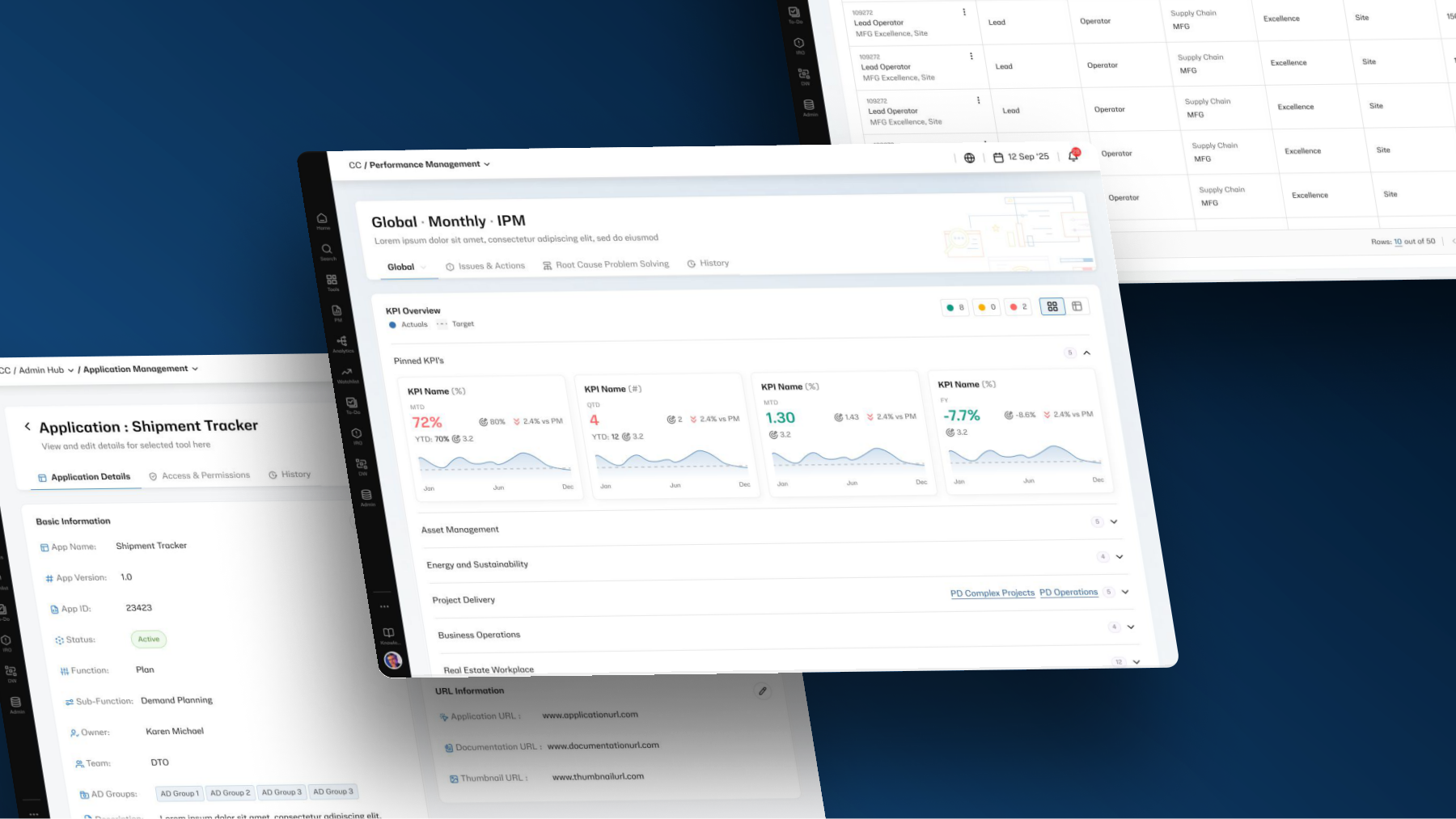
An atomic design system connected foundational elements, components, templates and pages. This provided a reusable vocabulary for an experience spanning more than 100 screens and 20 user journeys.
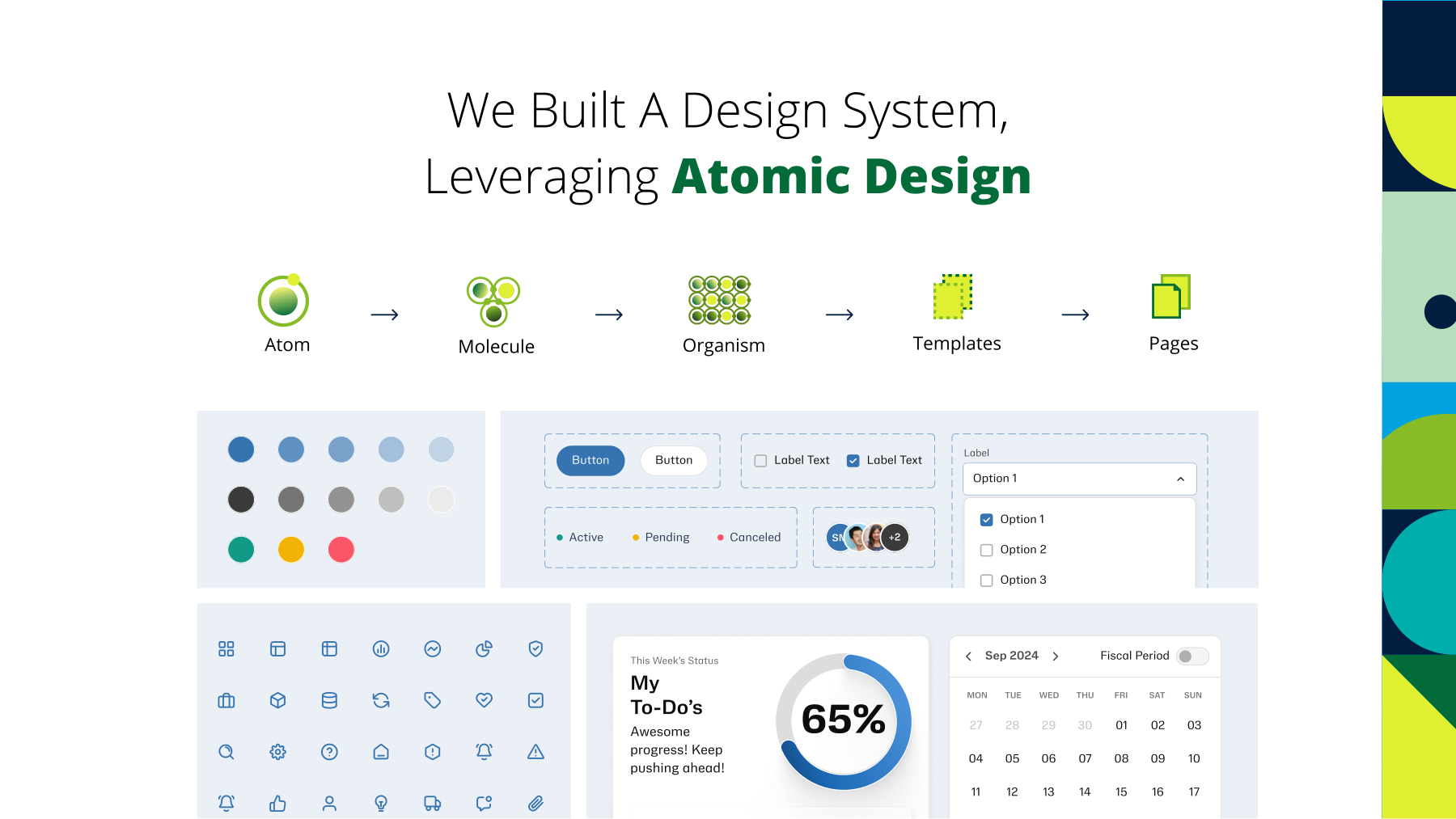
Selected UI evidence
Original project screen presentations. Values shown within the UI are sample content, not measured programme results.
A shared direction.
A substantial delivery foundation.
The source deck reports these outputs over three months. Together, the discovery, workshop decisions, screen designs and reusable system established a foundation for a more consistent operational experience.
The deck also describes reduced errors, enhanced productivity and near real-time visibility. It provides no baseline, measured uplift or post-launch evaluation, so these are presented as reported benefits rather than validated performance results.
The lesson is to treat enterprise transformation as a connected set of decisions about people, ownership, process and information. A coherent interface depends on that shared understanding.