UK Post Office / Assisted service & interaction systems
Many services.
One familiar way to serve.
Making a broad range of counter services easier to navigate through a shared point-of-sale framework, consistent interaction patterns and explicit rules for the moments that do not go to plan.

PeopleCounter colleagues serving customers with varied needs
Experience scopePOS shell, service windows and a rod-fishing licence journey
Delivery foundationShared UI rules, annotated flows and reusable components
01 / A diverse service landscape
The transaction changed.
The colleague still needed a familiar way through.
The Post Office brought together mail, money, travel, identity, licences and other services in one counter environment. Products varied in complexity and geography, while colleagues served customers with different backgrounds and levels of familiarity with the services.
The design challenge was to let individual services express their own rules without making every transaction feel like learning a different system. Navigation, data entry, feedback and completion needed a shared logic.
Historical programme context recorded in the project materials.
02 / The experience direction
Make consistency a delivery decision.
The work connected business analysis, customer journeys, wireframes and a common UX/UI specification. Rather than leaving consistency to individual screens, the specification gave teams a shared basis for reviewing behaviour and preparing designs for development.
- 01
Understand the service
Establish the product and business requirements.
- 02
Map the journey
Identify interactions, flow and edge cases.
- 03
Make it tangible
Develop wireframes that include alternate scenarios.
- 04
Review against shared rules
Check the flow against the UX/UI specification.
- 05
Carry decisions into delivery
Hand over signed-off designs and continue the conversation.
The leadership lens
Give teams a common language for decisions, while making the service-specific exceptions explicit.
03 / One shell, many services
Keep the counter familiar.
Give each service room to work.
The POS shell holds the wider transaction context: product categories, basket, sales information and terminal tasks. A dedicated microservice window then contains the current service journey. This separation gives service teams a defined space without asking them to reinvent the whole counter experience.
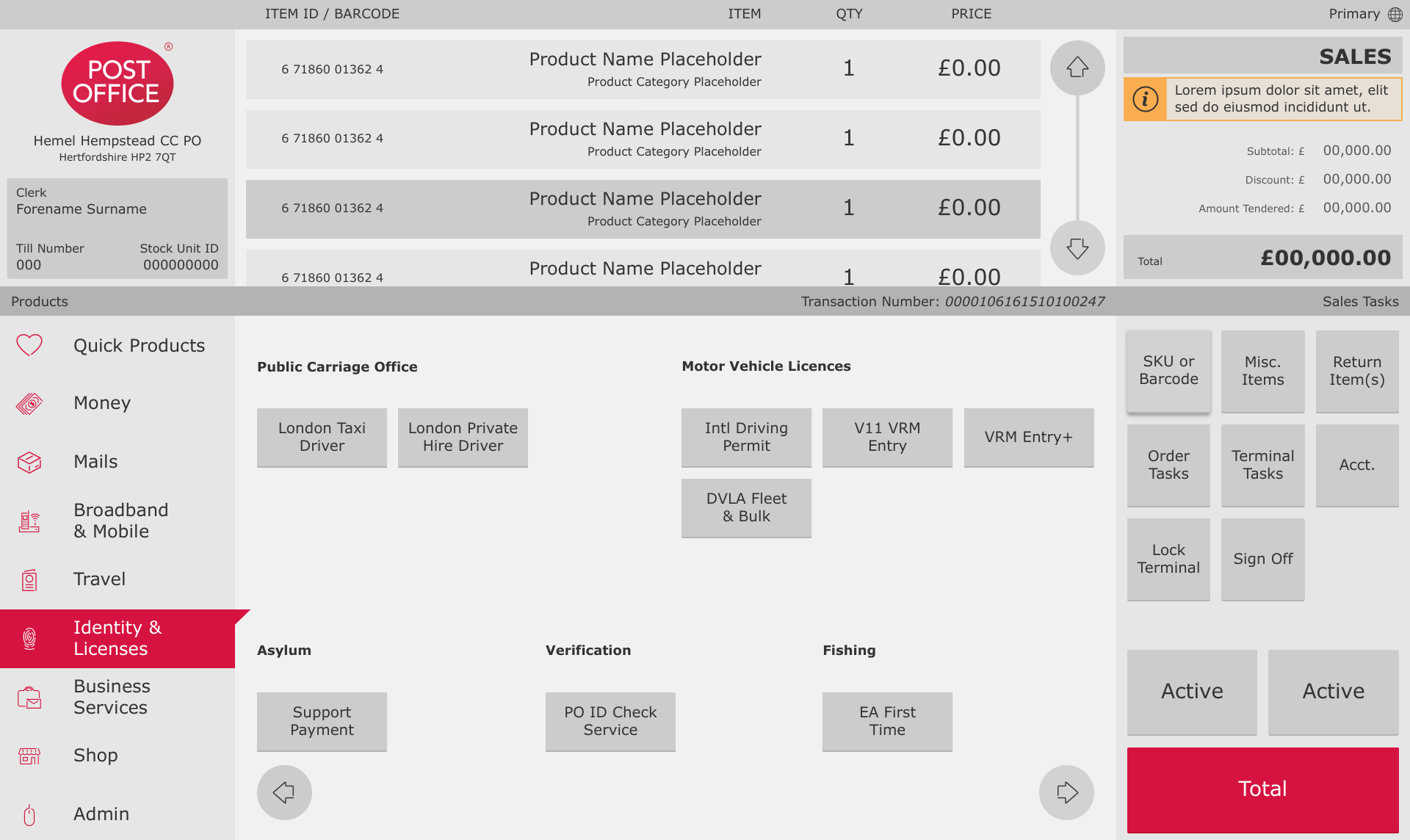
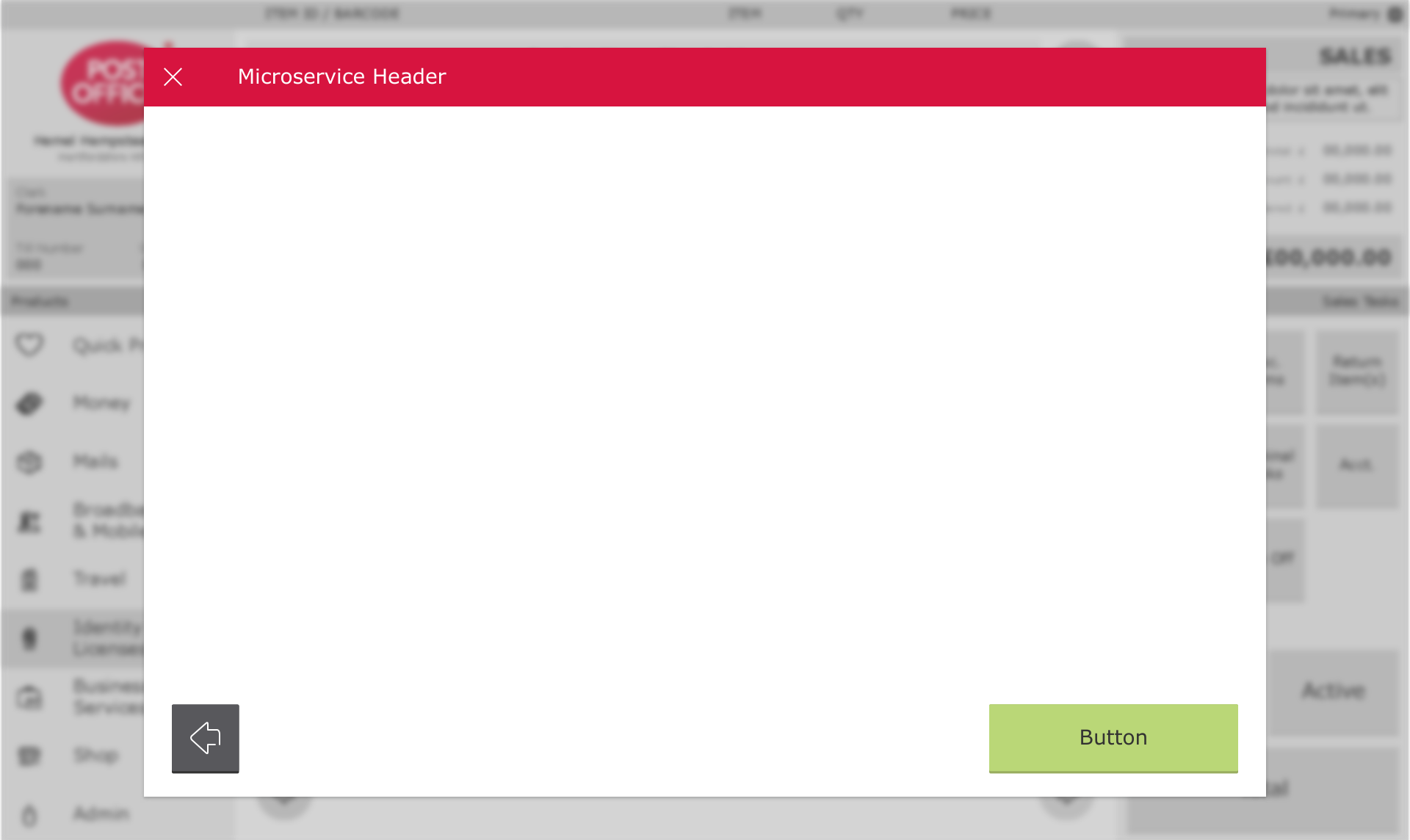

A shared grid
Window examples at 973 × 650 and 1528 × 1020 use the same layout approach across different terminal resolutions.
Predictable placement
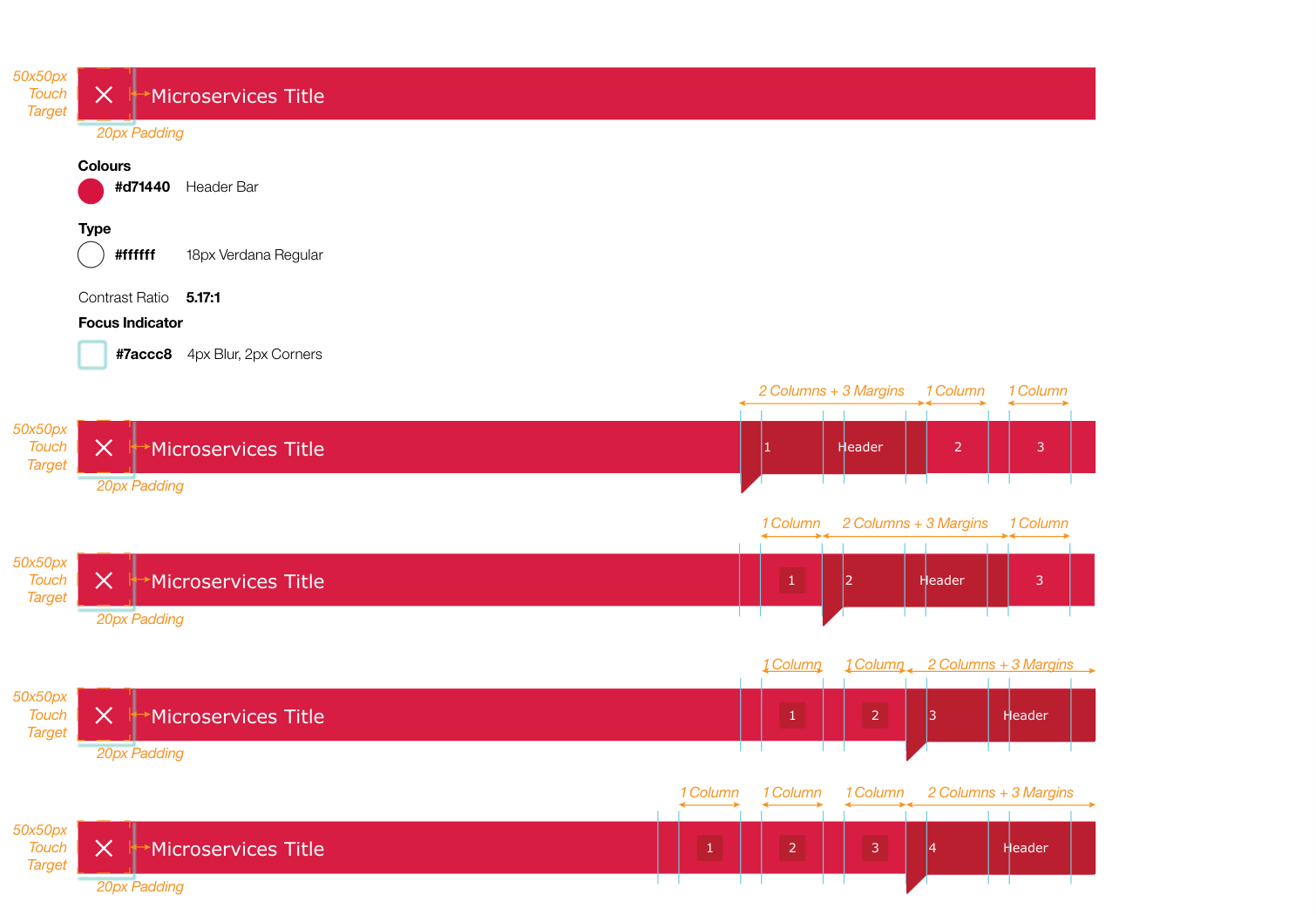
Back, support and primary actions have defined locations. Navigation does not compete with the main service content.

A clear next step
Journey stages and action labels make progression explicit: Continue, Confirm and Add to Basket each describe a different commitment.
04 / The rules meet a real service
A fishing licence is more than a form.
The rod-fishing licence journey brings together new purchases, renewals, upgrades, concession eligibility, dates, identity details and address lookup. The wireframes make those dependencies visible: tabs change the relevant fields, dates constrain available choices, and actions stay unavailable until required information is complete.
Recovery is part of the journey. An invalid postcode offers manual entry; an invalid date or start time produces contextual feedback. The goal is to help the colleague understand what needs attention and continue serving the customer.
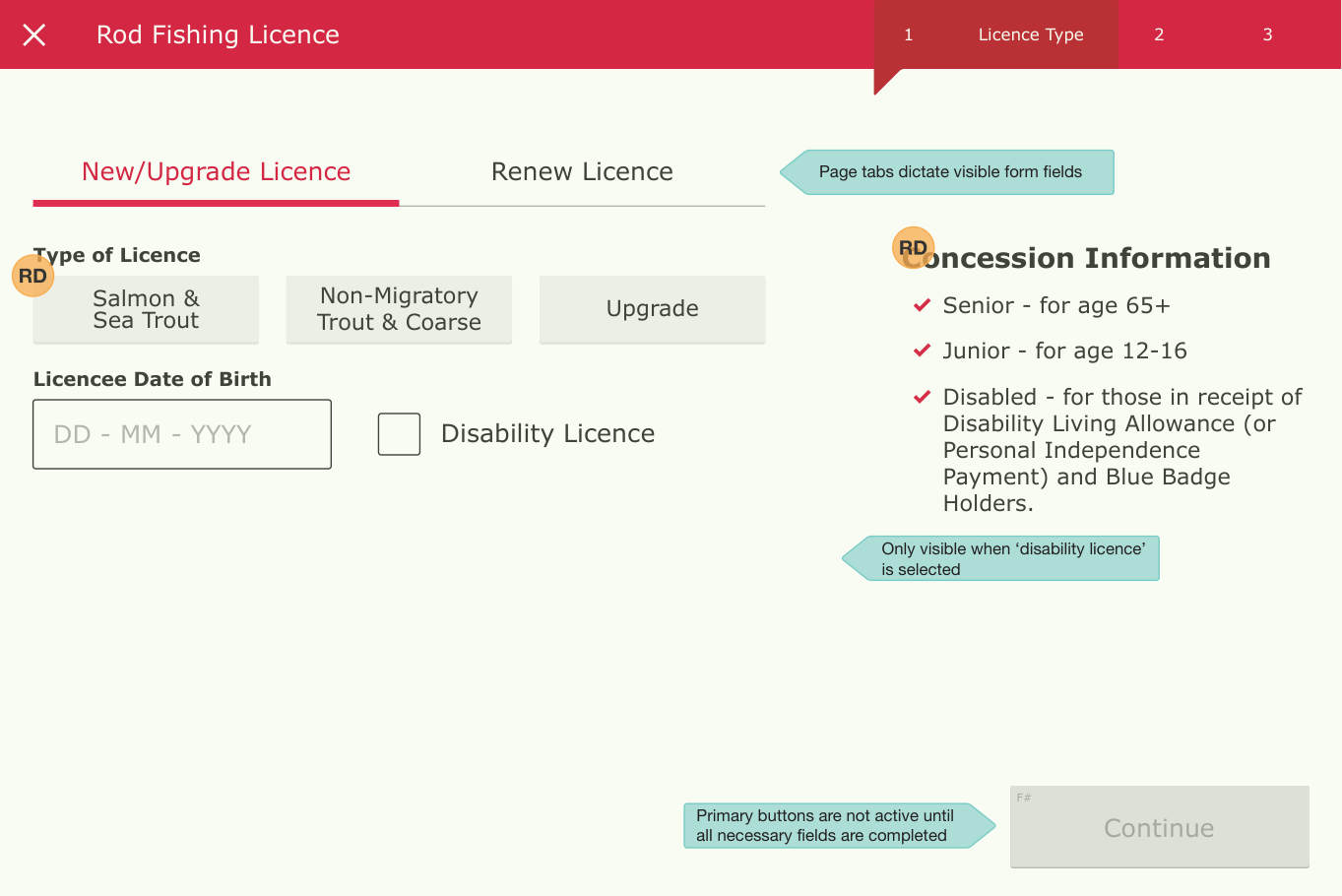
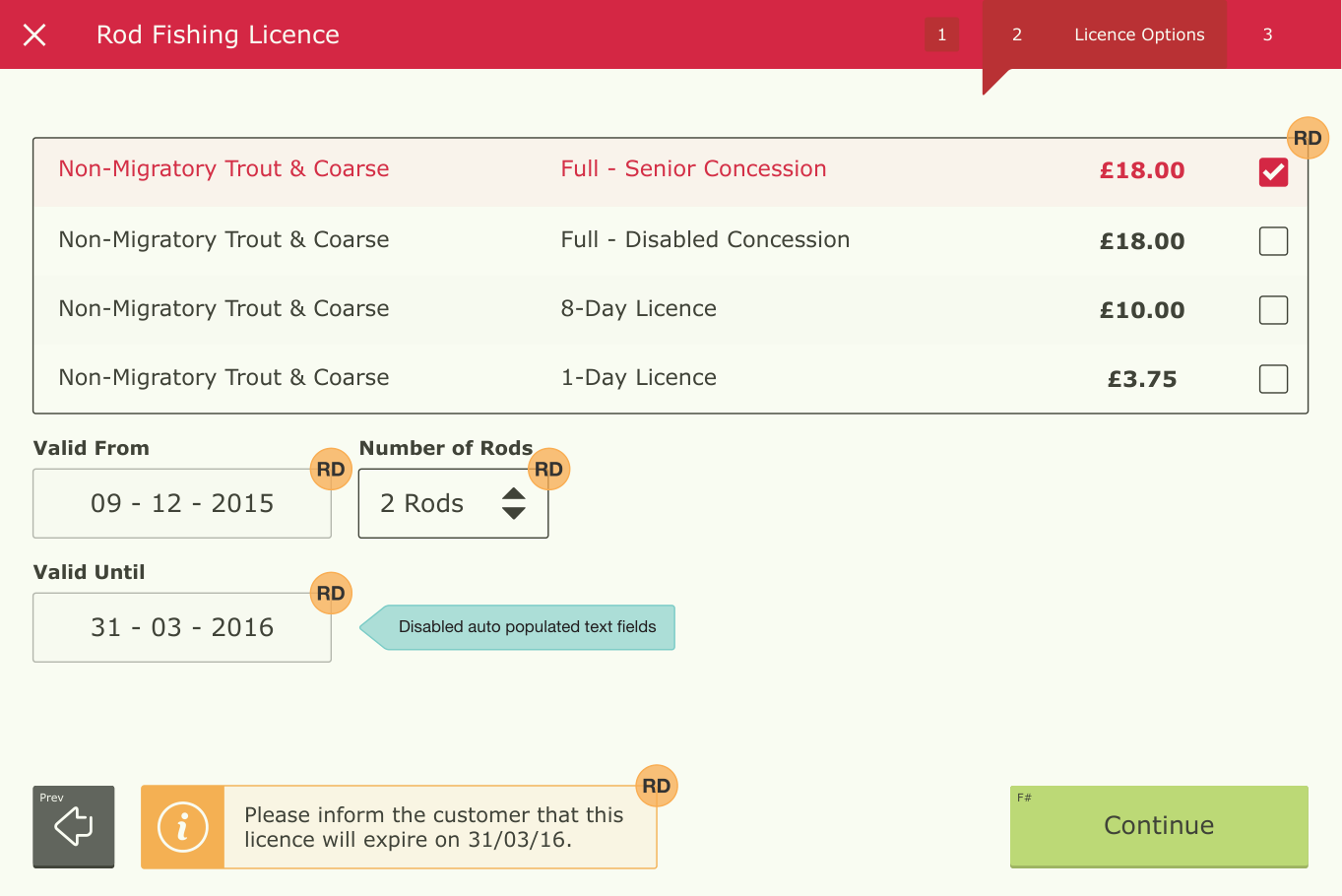
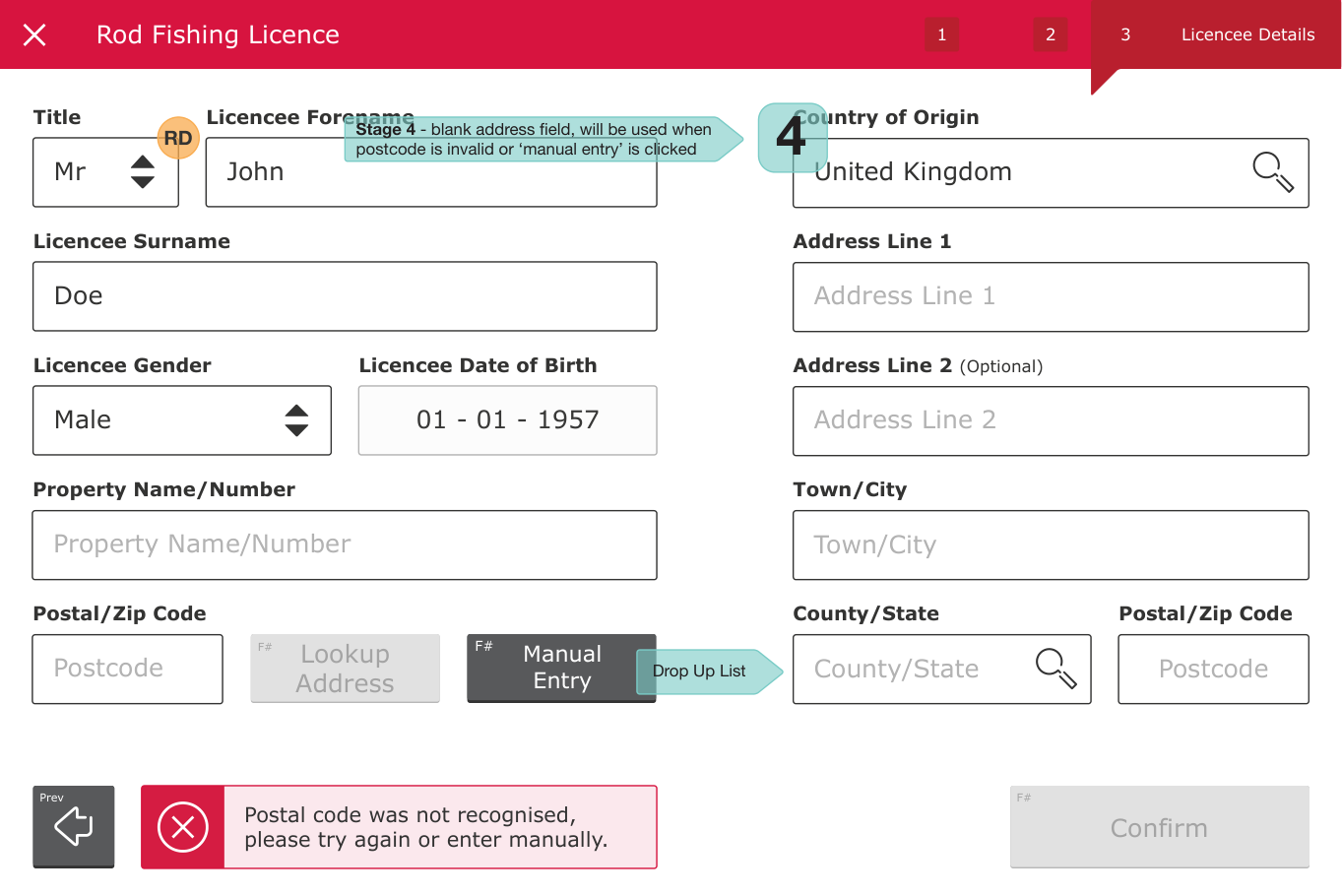
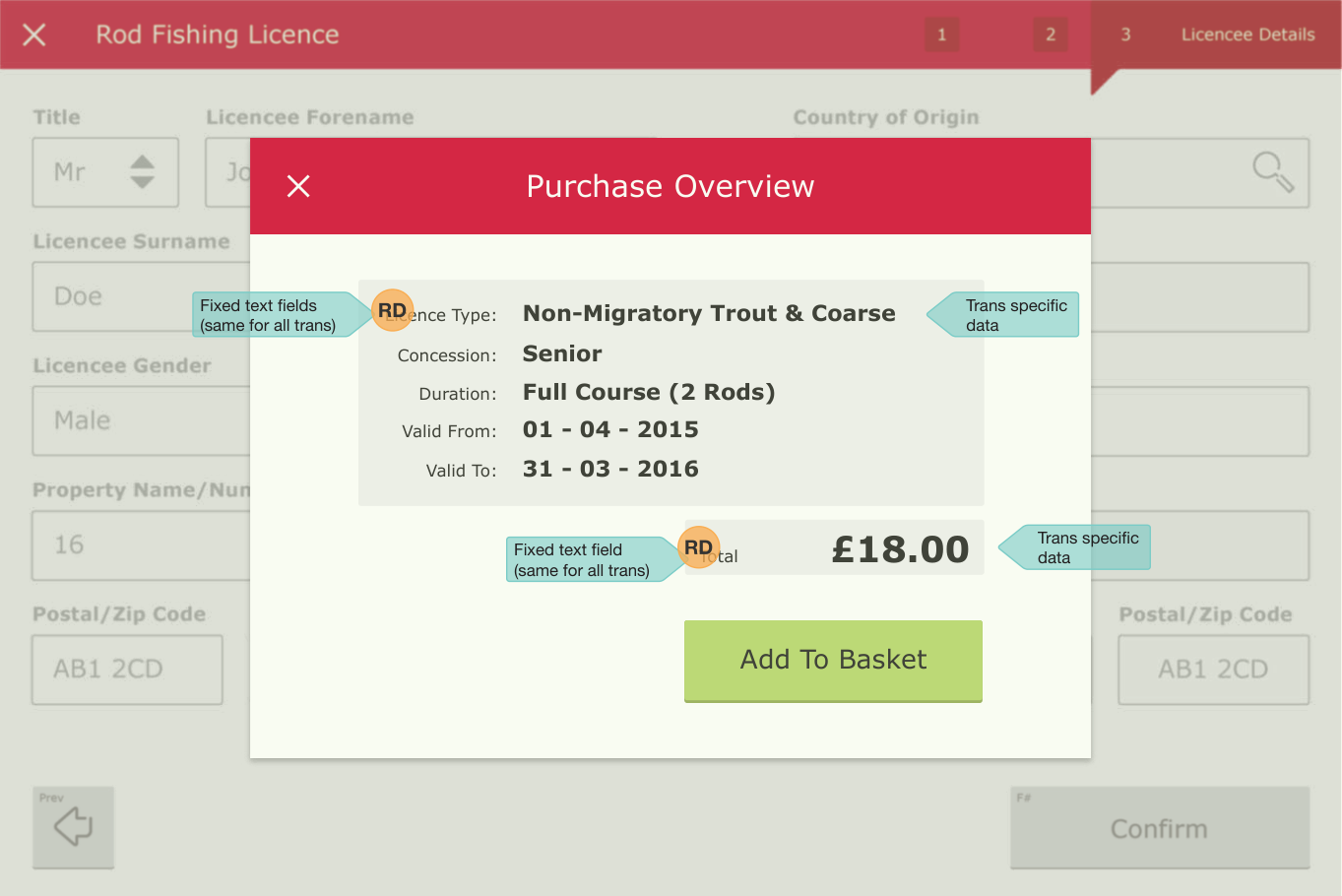
Original design artefacts retain period-specific licence rules, example data, prices and developer annotations.
05 / Make the behaviour buildable
The detail is where consistency becomes real.
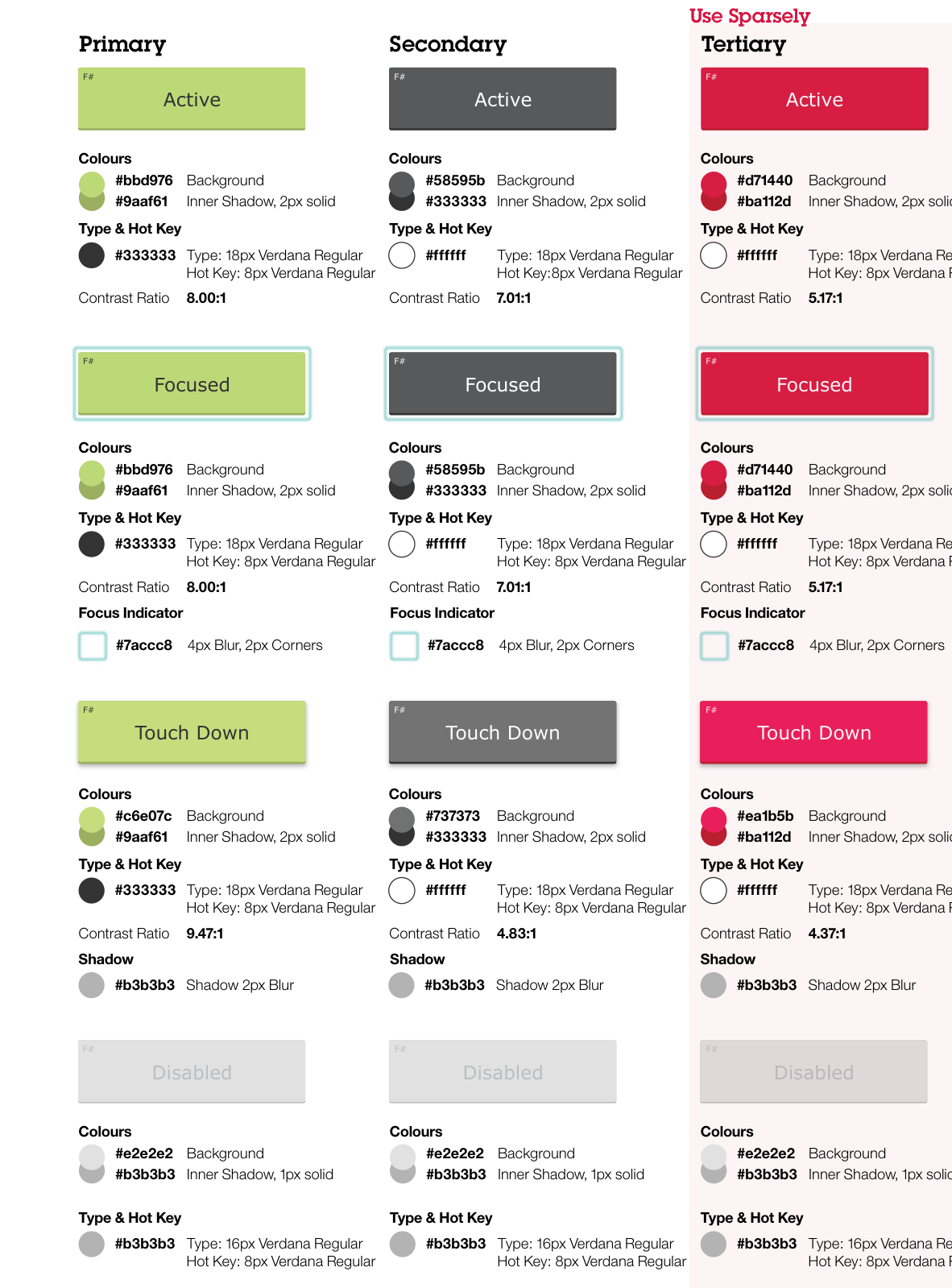
The UI specification describes active, focused, pressed and disabled component states, along with input behaviour, selection patterns, validation and overview layouts. It also defines touch targets and placement rules so teams can discuss the same behaviour in concrete terms.
The annotated licence flow carries that language into a service: which fields are editable, when buttons activate, what changes after a lookup, and how an error affects progression. The delivery artefact is not simply a set of screens; it records the decisions between them.
06 / What this work demonstrates
Design the system behind the service.
The central contribution of this work is a documented foundation for consistency: a shared shell, reusable interaction rules and a service journey with its exceptions made explicit. It shows how experience decisions can carry from a product brief into the detail that developers need.
For me, the enduring lesson is to treat edge cases and recovery as part of the experience direction. That is where a framework proves whether it can support the realities of service delivery.
Protect the common language
Keep familiar patterns stable across a diverse service catalogue.
Make exceptions visible
Document the conditions that change a journey, not only the ideal route.
Specify the behaviour
Give teams a reviewable reference for states, validation and progression.
The material documents design intent and delivery specifications. Post-launch performance measures were not included.
Explore more work