
Use evidence to guide the backlog.
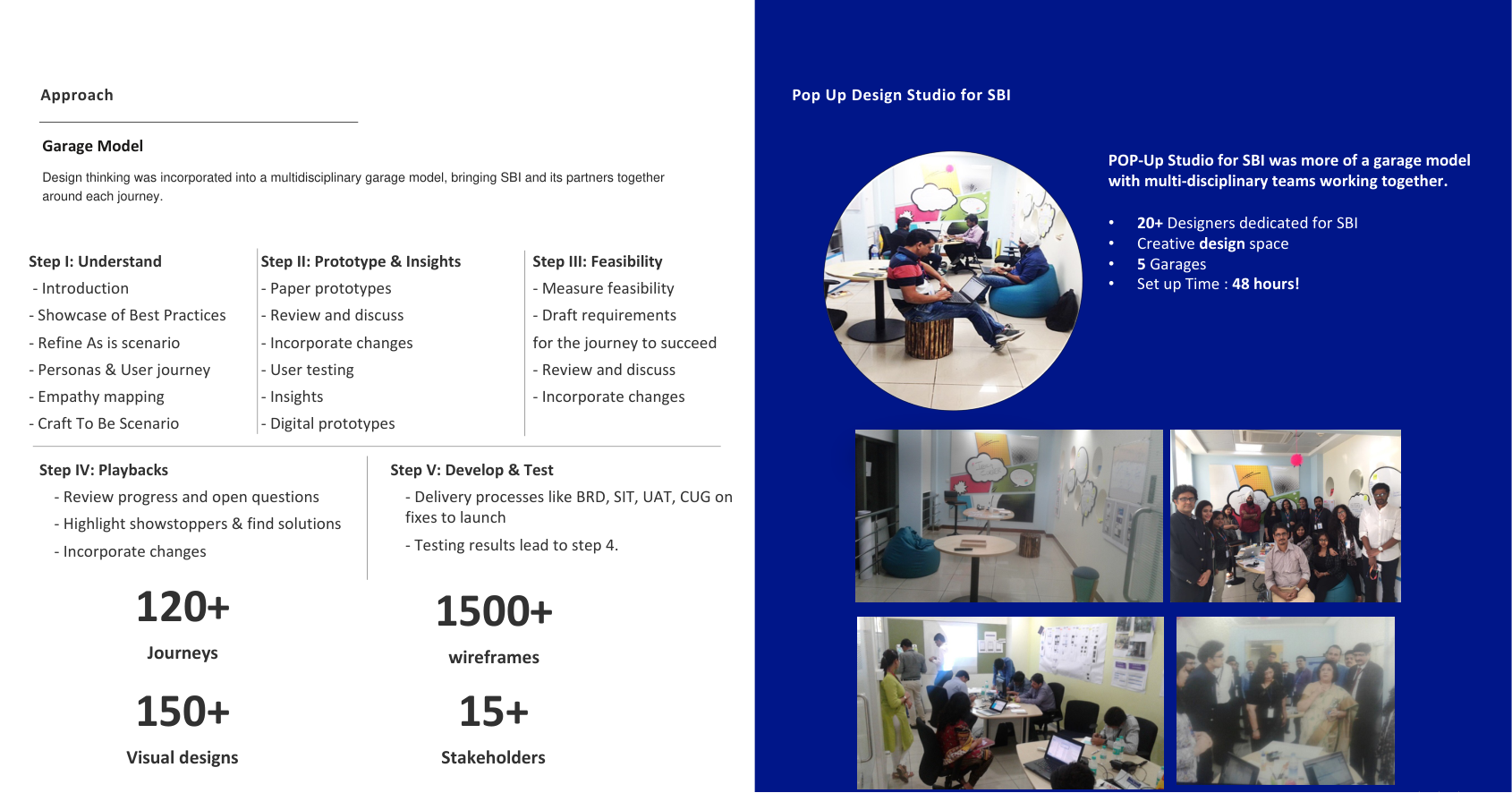
Personas, empathy mapping and current-to-future journeys gave stakeholders a shared basis for defining the experience.
Connecting banking, financial services and everyday commerce through a shared experience direction and a multidisciplinary delivery model.

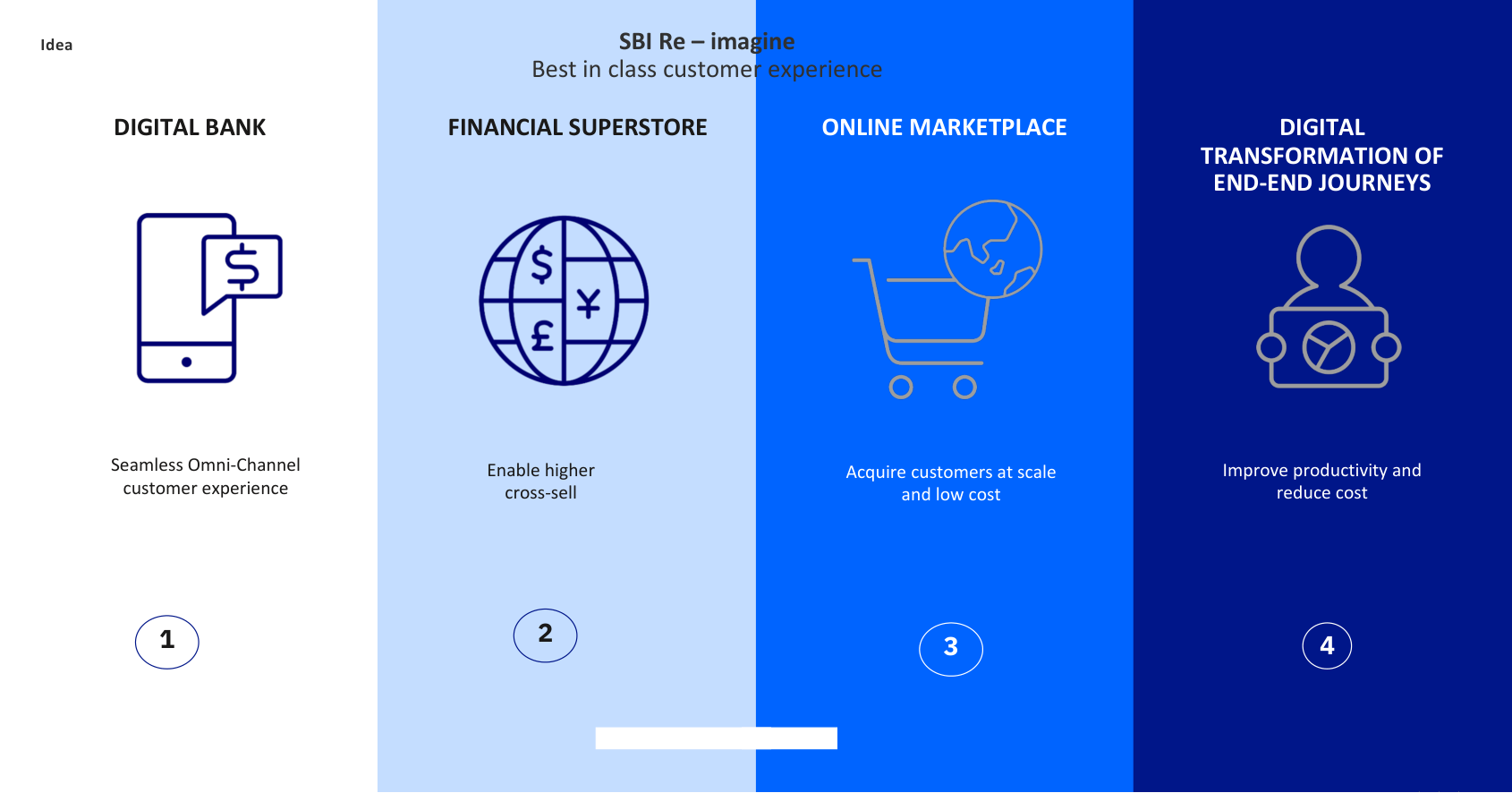
SBI wanted to extend its trusted banking relationship into a digital platform that brought a wide range of products and services to customers’ fingertips. The ambition combined a seamless channel experience, greater cross-sell and a marketplace that could attract customers at scale.
The wider transformation also sought higher productivity and lower cost. The documented platform scope focused on the digital bank, financial superstore and online marketplace: three connected propositions that needed to feel like one service.
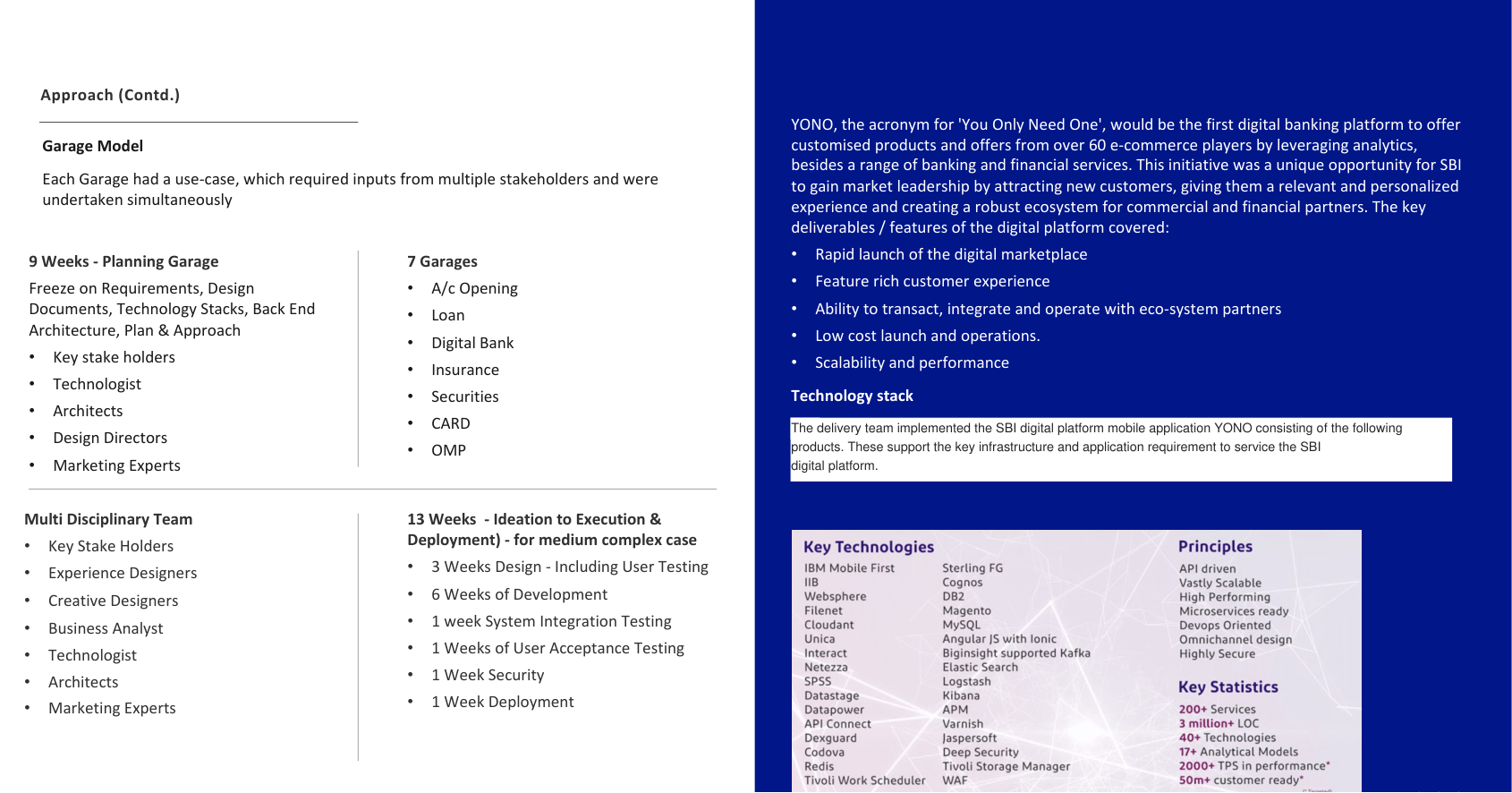
The central insight was to connect customers with the benefits the bank could offer in one place. YONO — “You Only Need One” — brought banking and financial services together with an ecosystem of more than 60 e-commerce partners described in the project material.
This required thinking beyond individual screens: account opening, loans, insurance, securities, cards and shopping each brought different needs, stakeholders and operational dependencies.
A pop-up design studio brought more than 20 designers into a dedicated collaborative environment. The material describes a studio established in 48 hours and a garage model that brought business stakeholders, designers, analysts, technologists, architects and marketing specialists together around journeys.
The process moved from understanding people and current journeys to prototypes, user testing, feasibility and shared playbacks. Development and testing fed questions back into that decision-making rhythm.
The programme material records more than 120 journeys, 1,500 wireframes, 150 visual designs and 15 stakeholders. These figures describe the scale of the collective programme.
Personas, empathy mapping and current-to-future journeys gave stakeholders a shared basis for defining the experience.
Garages organised work around use cases. Playbacks surfaced open questions and showstoppers while there was time to act.
Paper and digital prototypes, user testing and feasibility reviews connected experience intent to practical requirements.
A planning garage aligned requirements, design documents, technology and architecture. For a medium-complexity case, the material outlines a 13-week path from design and user testing through development, integration, acceptance, security and deployment. This was a delivery model, rather than a claim that every journey followed an identical schedule.
Reported as of 11 April 2018 in the supplied project retrospective. These are historical programme results, rather than current usage figures or outcomes attributable to design alone.
The leadership lesson is the connection between experience ambition and delivery capacity. A broad platform proposition needs more than a set of interfaces: it needs a shared understanding of customers, decisions that cross disciplines and a working rhythm that makes dependencies visible.
The garage model made those connections concrete. It created space for stakeholders to shape journeys together, test ideas and resolve feasibility before moving toward delivery.

